
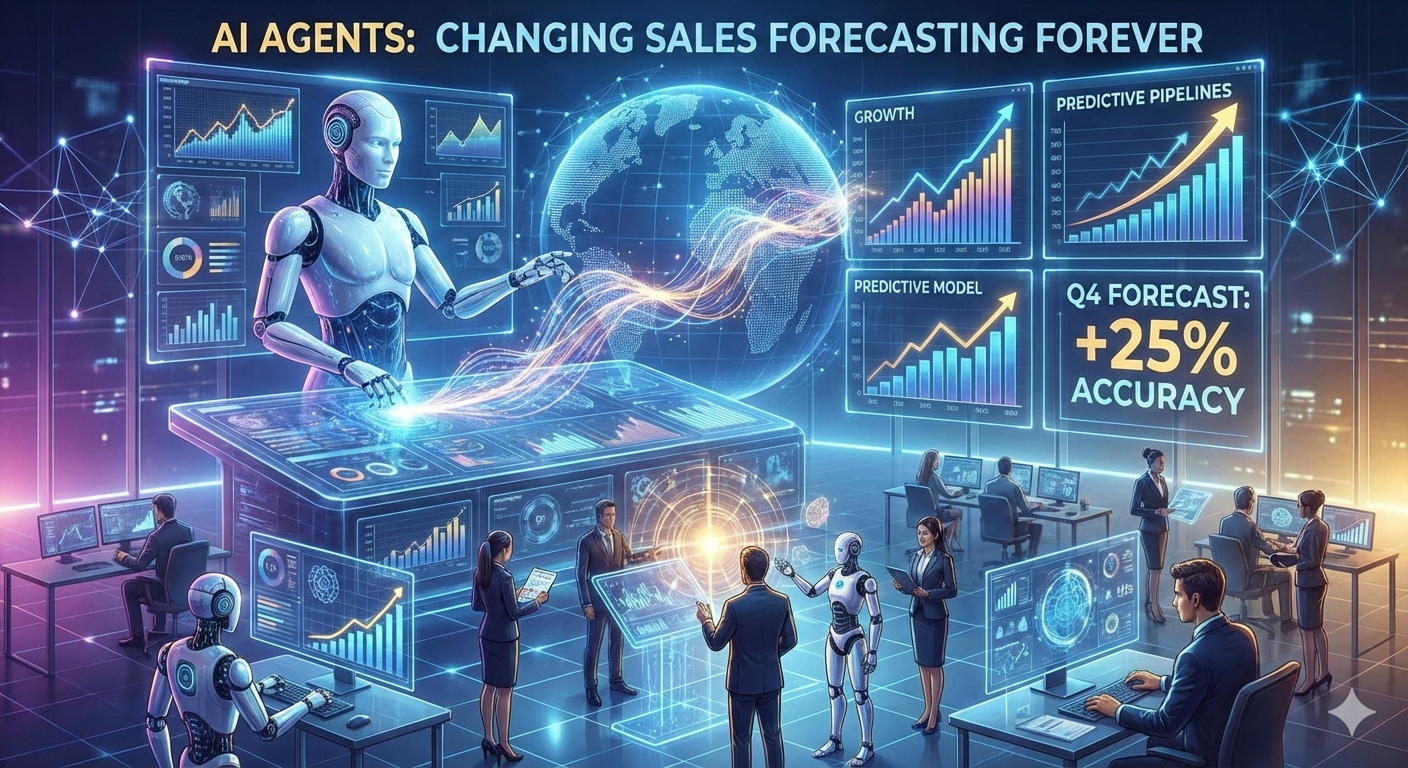
Sales forecasting has always been a mix of numbers, intuition, and experience. Spreadsheets, CRM reports, and quarterly reviews try to paint a picture of what the future might look like. Yet for many organizations, forecasts still arrive late, miss sudden market shifts, and fail to reflect what’s really happening on the ground.
The problem isn’t a lack of data. It’s the way data is used.
Traditional sales forecasting depends heavily on lagging indicators—last quarter’s revenue, historical conversion rates, and pipeline stages that don’t always reflect real buyer intent. By the time trends become visible in reports, opportunities may already be lost. This is where AI agents are fundamentally reshaping how businesses predict, plan, and grow.
From Static Reports to Living Forecasts
AI agents move sales forecasting beyond static dashboards. Instead of waiting for end-of-month data, these intelligent agents continuously analyze live information from CRMs, emails, meetings, customer interactions, and even external market signals.
For example, an AI agent can detect subtle changes in customer behavior—fewer email responses, longer deal cycles, or reduced engagement with proposals—and immediately factor those signals into revenue projections. Forecasts become living models that adjust in real time, not outdated snapshots reviewed weeks later.
At Softree Technology, we see this shift as a move from reactive forecasting to proactive decision-making.
Understanding Context, Not Just Numbers
One of the biggest limitations of traditional forecasting is its inability to understand context. A deal marked as “90% likely to close” in a CRM may look strong on paper, but it doesn’t tell the full story. Has the customer’s budget been approved? Has decision-making slowed? Are competitors suddenly involved?
AI agents combine structured CRM data with unstructured information such as call transcripts, meeting notes, support tickets, and customer sentiment. By understanding context, not just numbers, forecasts become far more realistic and reliable.
This contextual intelligence allows sales leaders to ask better questions. Which deals are truly at risk? Which accounts are showing early signs of expansion? Where should teams focus their effort right now?
Real-Time Signals Drive Better Revenue Predictability
Markets don’t wait for quarterly reviews. Economic changes, industry trends, and customer priorities can shift overnight. AI agents continuously monitor internal data alongside external signals—market trends, seasonal patterns, and customer engagement behavior—to refine forecasts as conditions change.
Instead of being surprised by missed targets, organizations gain early visibility into potential gaps or upside opportunities. This enables faster course correction, smarter resource allocation, and more confident planning.
For leadership teams, this means fewer last-minute firefights and more strategic control over revenue outcomes.
Automation That Empowers Sales Teams
AI-driven forecasting isn’t about replacing sales teams—it’s about freeing them from manual analysis and guesswork. AI agents can automatically update forecasts, flag risks, recommend next-best actions, and even trigger workflows across systems.
When integrated with Microsoft Power Platform, SharePoint, and Power Apps, these agents can seamlessly connect data across departments. Sales, finance, and operations all work from the same intelligent forecast, reducing misalignment and improving collaboration.
At Softree Technology, we help organizations design these intelligent systems so forecasting becomes a natural byproduct of daily sales activity—not an extra reporting burden.
The Future of Sales Forecasting Is Adaptive
Sales forecasting is no longer about predicting the future based solely on the past. It’s about adapting continuously as new information emerges. AI agents bring speed, intelligence, and accuracy to a process that has long struggled with uncertainty.
Organizations that embrace AI-driven forecasting gain more than better numbers. They gain clarity. Clarity about where revenue is coming from, what risks lie ahead, and how to act before it’s too late.
The future of sales forecasting isn’t static. It’s adaptive, intelligent, and powered by AI agents—and that future is already here.