How a Multi-Specialty Hospital Network Improved Capacity Planning with AI-Powered Predictive Bed Occupancy Analytics
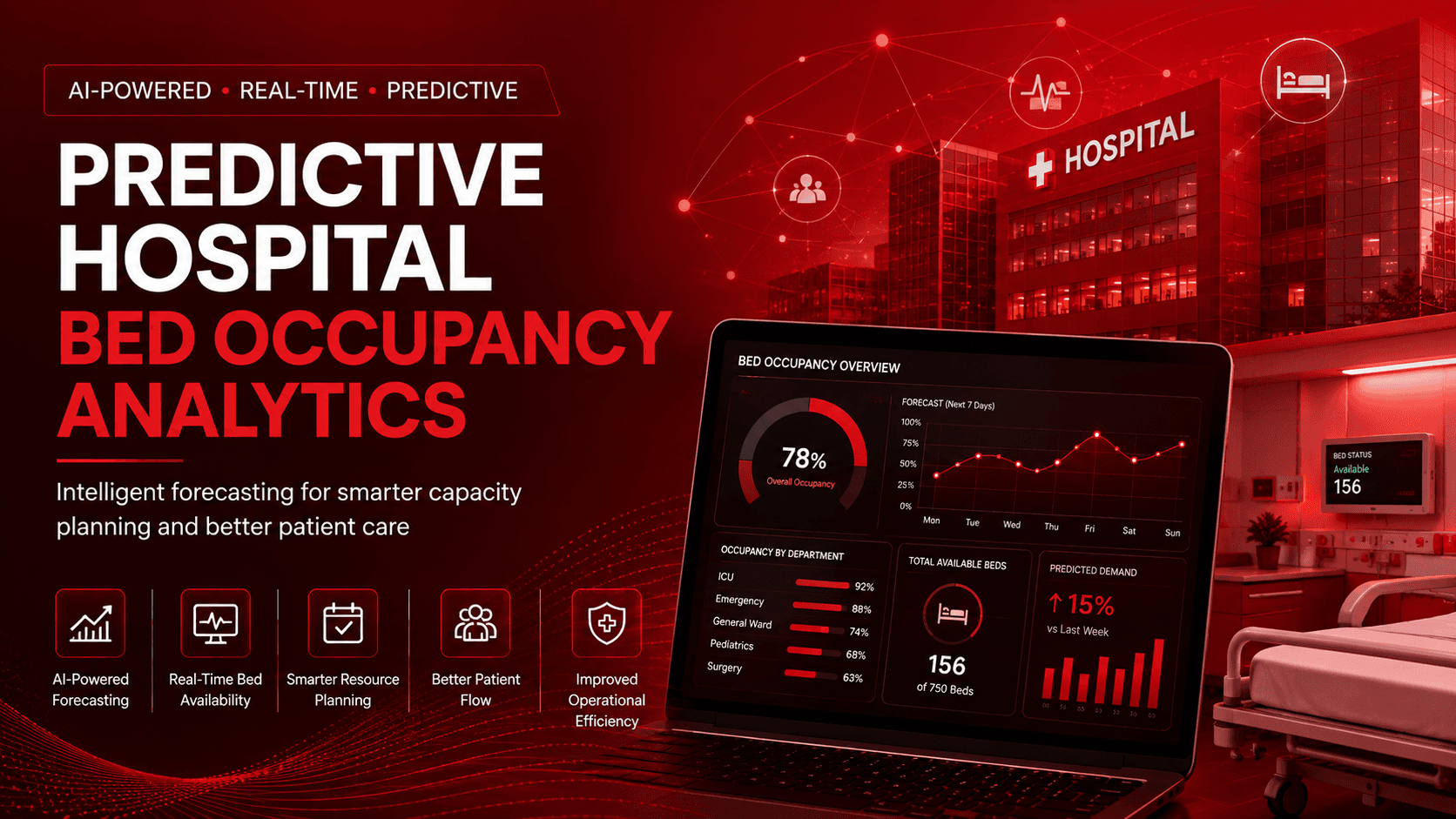
A multi-specialty hospital network improved bed allocation efficiency by 35% and reduced emergency wait times by 28% using AI-powered occupancy forecasting.
Business Process Challenges
- Managed more than 750+ beds across multi-specialty hospital network with fluctuating patient demand.
- Patient admission, discharge, and bed occupancy data was distributed across multiple operational systems.
- Limited real-time visibility made it difficult for administrators to accurately monitor hospital capacity.
- Teams relied on historical reports and manual spreadsheets for bed occupancy monitoring and capacity planning.
- Delayed and fragmented data contributed to ICU capacity constraints, emergency department overcrowding, and admission delays.
- Leadership lacked predictive insights to anticipate patient demand and optimize resources across departments.
- Required an AI-powered analytics platform to forecast bed occupancy, predict admissions and discharges, and support proactive capacity planning.
Our Strategic Approach
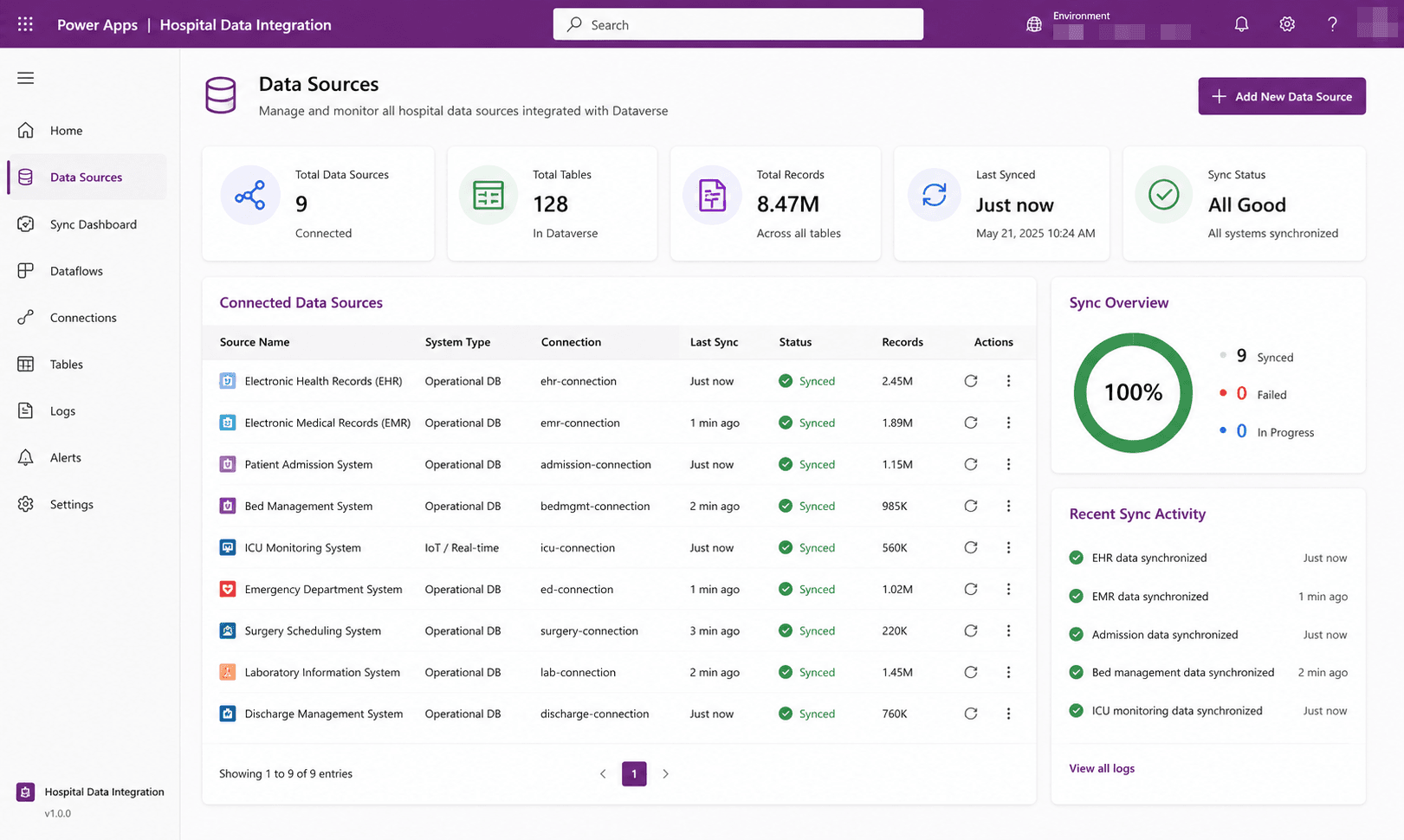
- Designed and implemented an AI-powered hospital occupancy analytics platform using Microsoft Fabric, Power BI, Power Apps, Dataverse, Azure Machine Learning, AI Builder, Copilot Studio, and Power Automate.
- Consolidated operational data from EHR systems, patient admission systems, bed management systems, and other hospital applications into Microsoft Dataverse.
- Used Microsoft Fabric Data Factory pipelines, Lakehouse storage, Real-Time Analytics, and Semantic Models to unify historical and real-time hospital data.
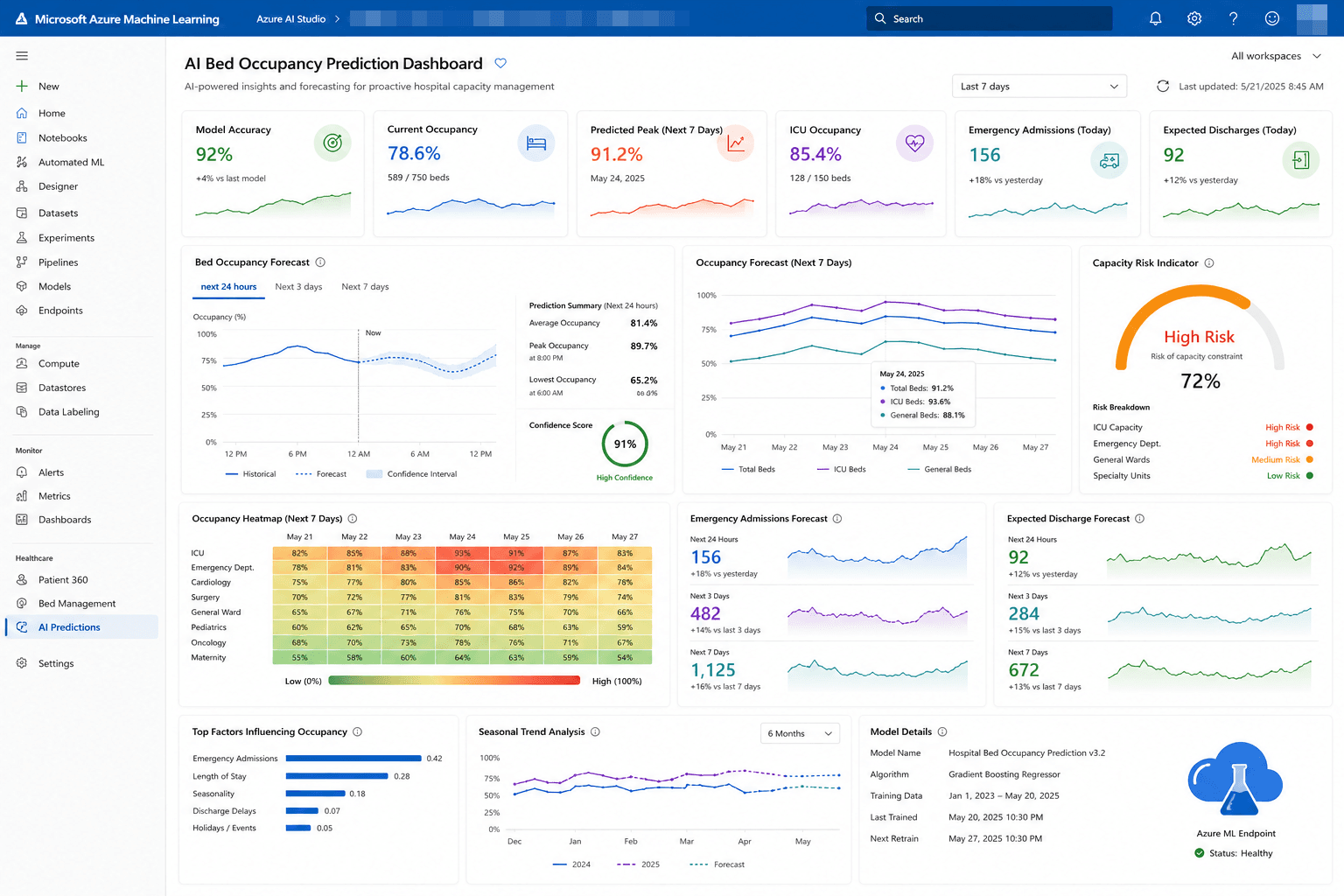
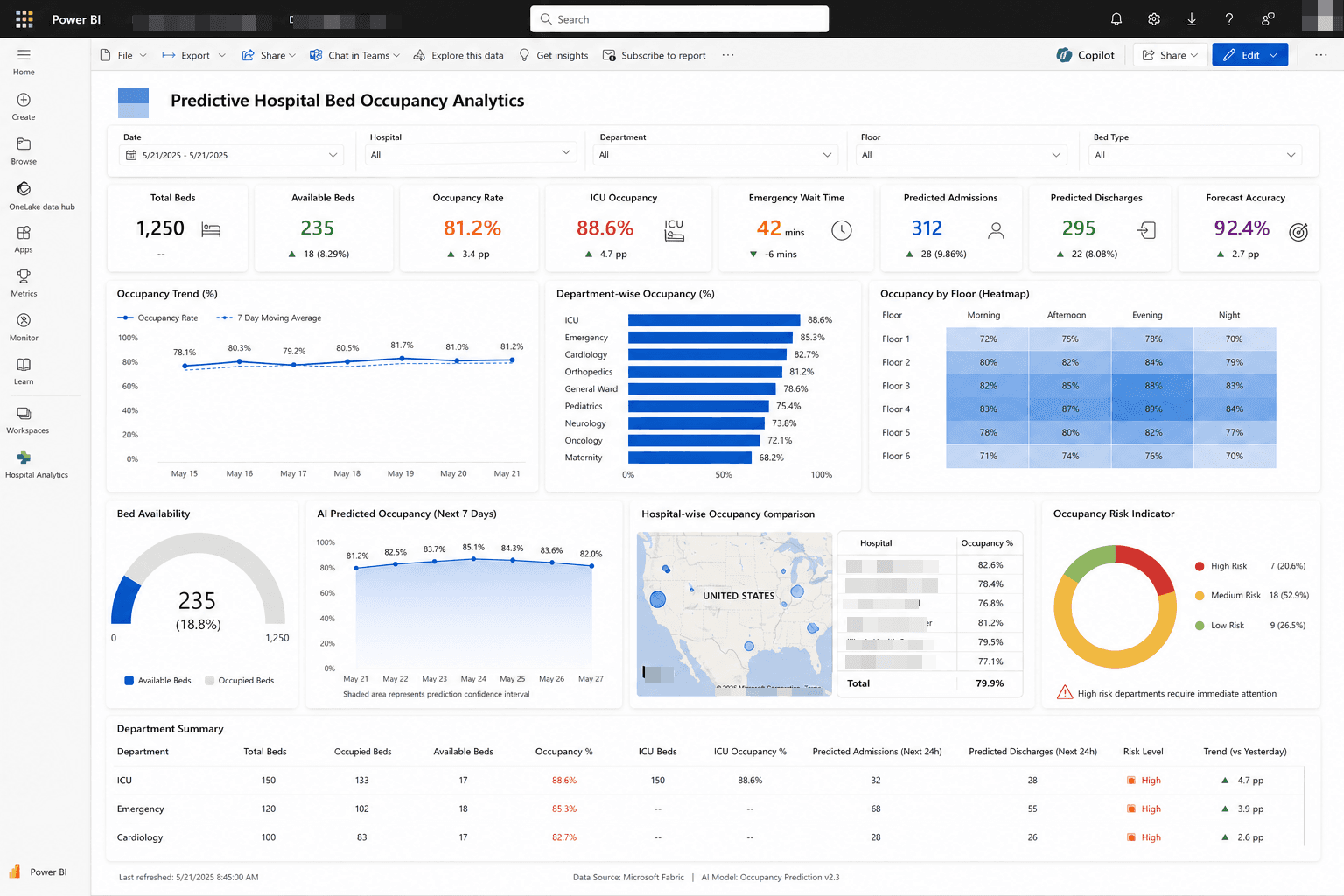
- Developed predictive models using AI Builder and Azure Machine Learning to forecast bed occupancy, patient admissions, discharge timelines, ICU demand, and potential capacity shortages.
- Created Power BI dashboards to provide real-time visibility into hospital occupancy, capacity, patient flow, and operational performance.
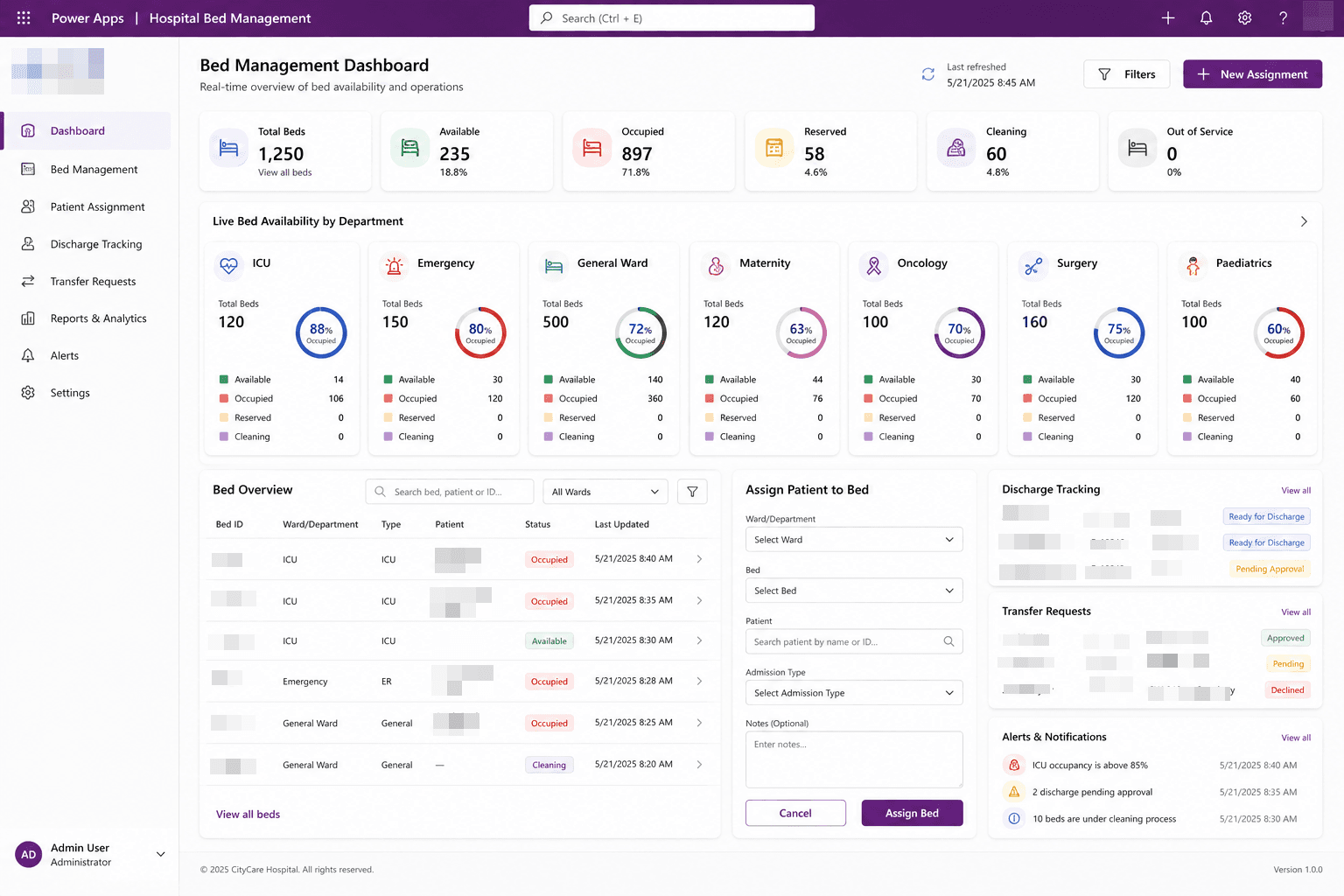
- Developed a Power Apps bed management portal to simplify bed assignments and patient movement.
- Automated occupancy threshold and staffing alerts using Power Automate to support proactive capacity management.
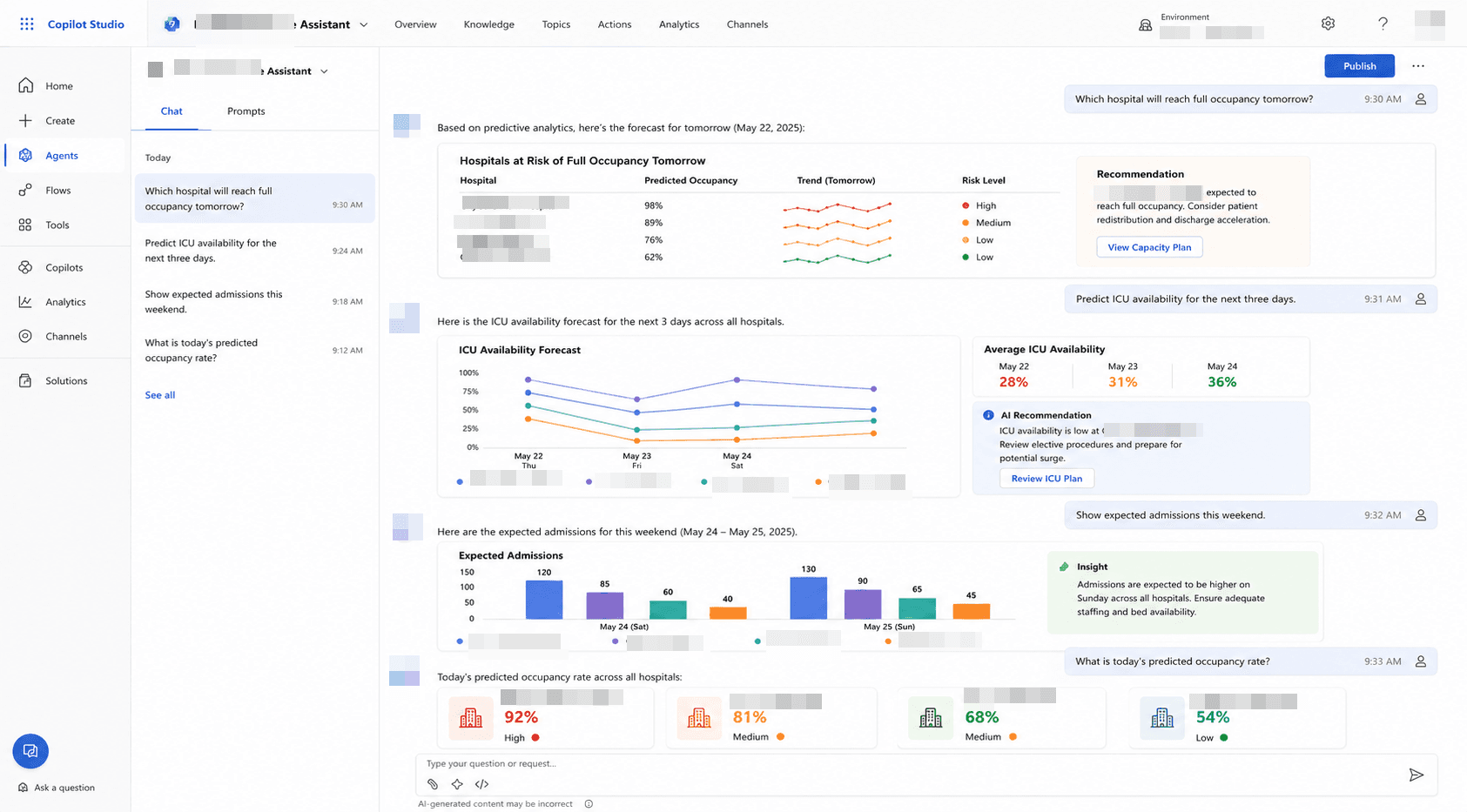
- Integrated Copilot Studio to enable executives to access hospital operational insights through natural language queries.
How we delivered it.
Explore the Solution Through visuals
What changed for the client.
- Achieved high accuracy in bed occupancy forecasting through AI-powered predictive analytics.
- Reduced emergency department wait times.
- Improved bed allocation efficiency across departments.
- Reduced patient admission delays.
- Improved ICU capacity planning and resource readiness.
- Accelerated bed turnover and improved patient flow.
- Enabled faster executive decision-making through real-time operational insights.
- Reduced manual reporting efforts through automated analytics.
- Improved resource utilization across hospital departments.
- Increased operational planning efficiency.
- Established a scalable foundation for AI-driven capacity planning and smarter hospital operations.
The numbers behind the rollout.
The full integration layer.
Other engagements worth a look.
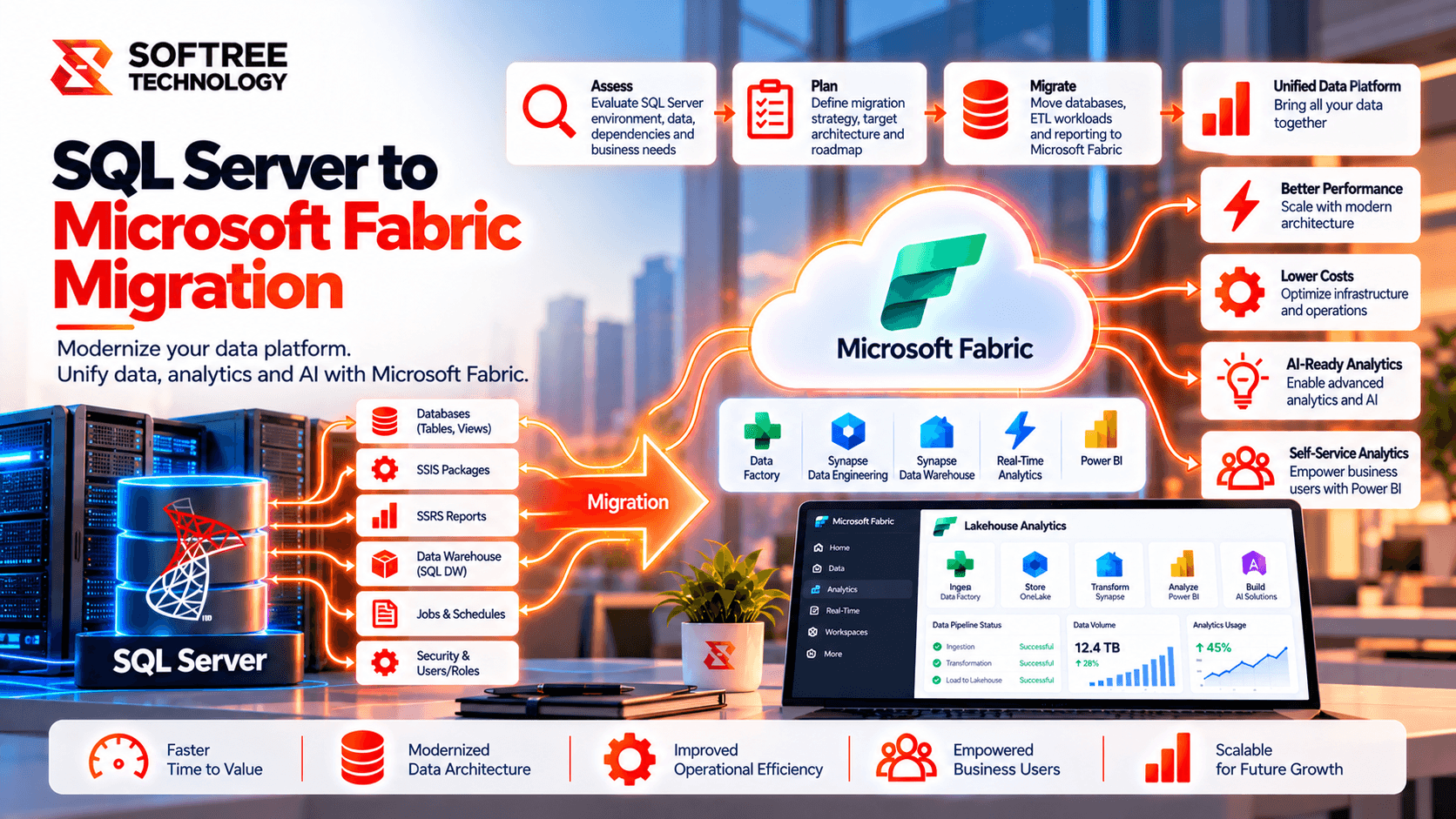
SQL Server to Microsoft Fabric Data Warehouse Migration
Modernizing an enterprise SQL Server data warehouse with Microsoft Fabric while maintaining data quality, performance, security, and reporting continuity.
Read case study→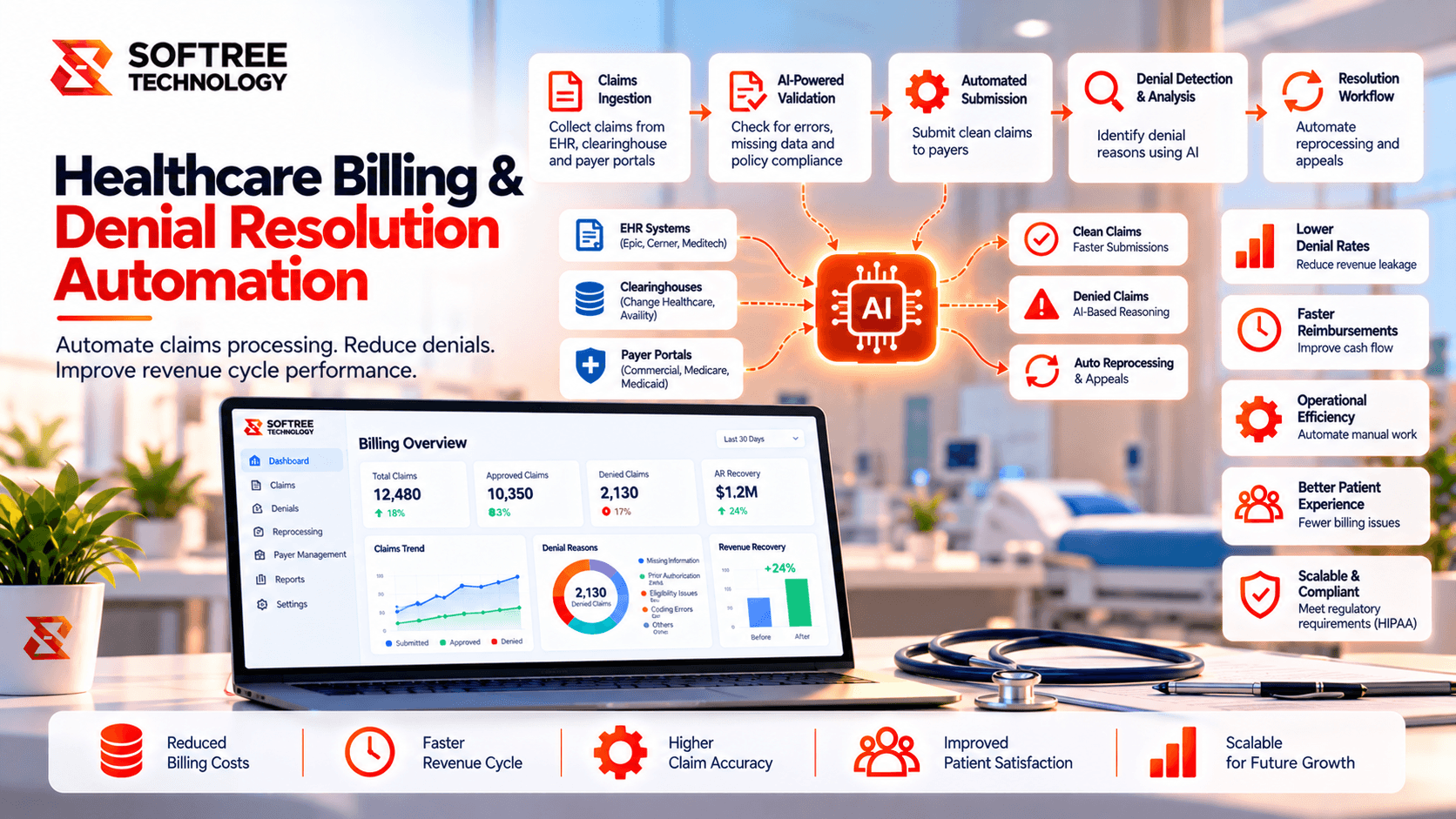
Healthcare Billing & Denial Resolution Agent
A Singapore healthcare provider proposed an AI agent to streamline claim denial investigations, payer research, follow-ups, and specialist review.
Read case study→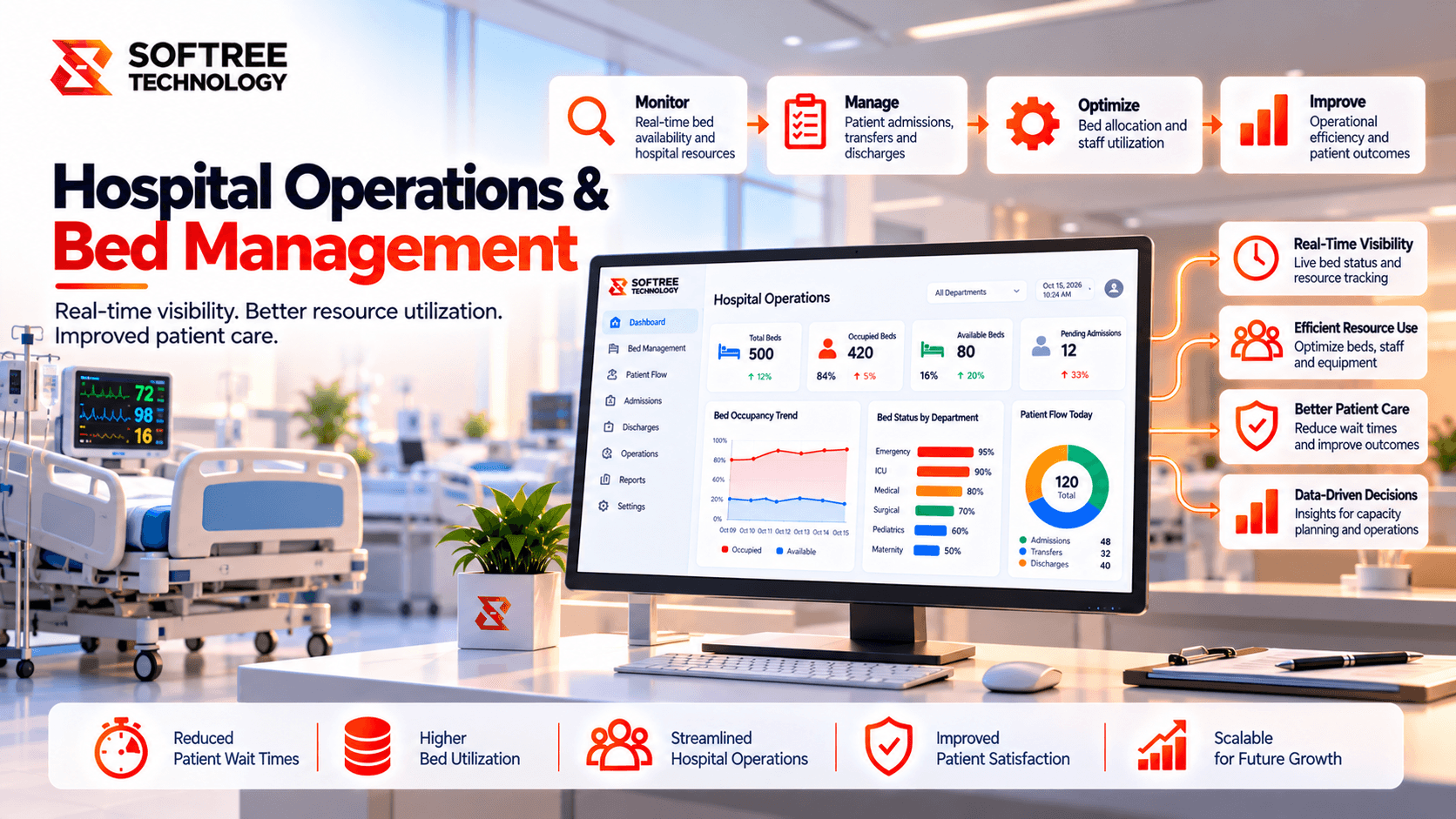
Hospital Operations & Bed Management Agent
A UAE hospital network proposed an agentic AI solution to improve bed readiness, discharge coordination, patient transfers, and operational visibility.
Read case study→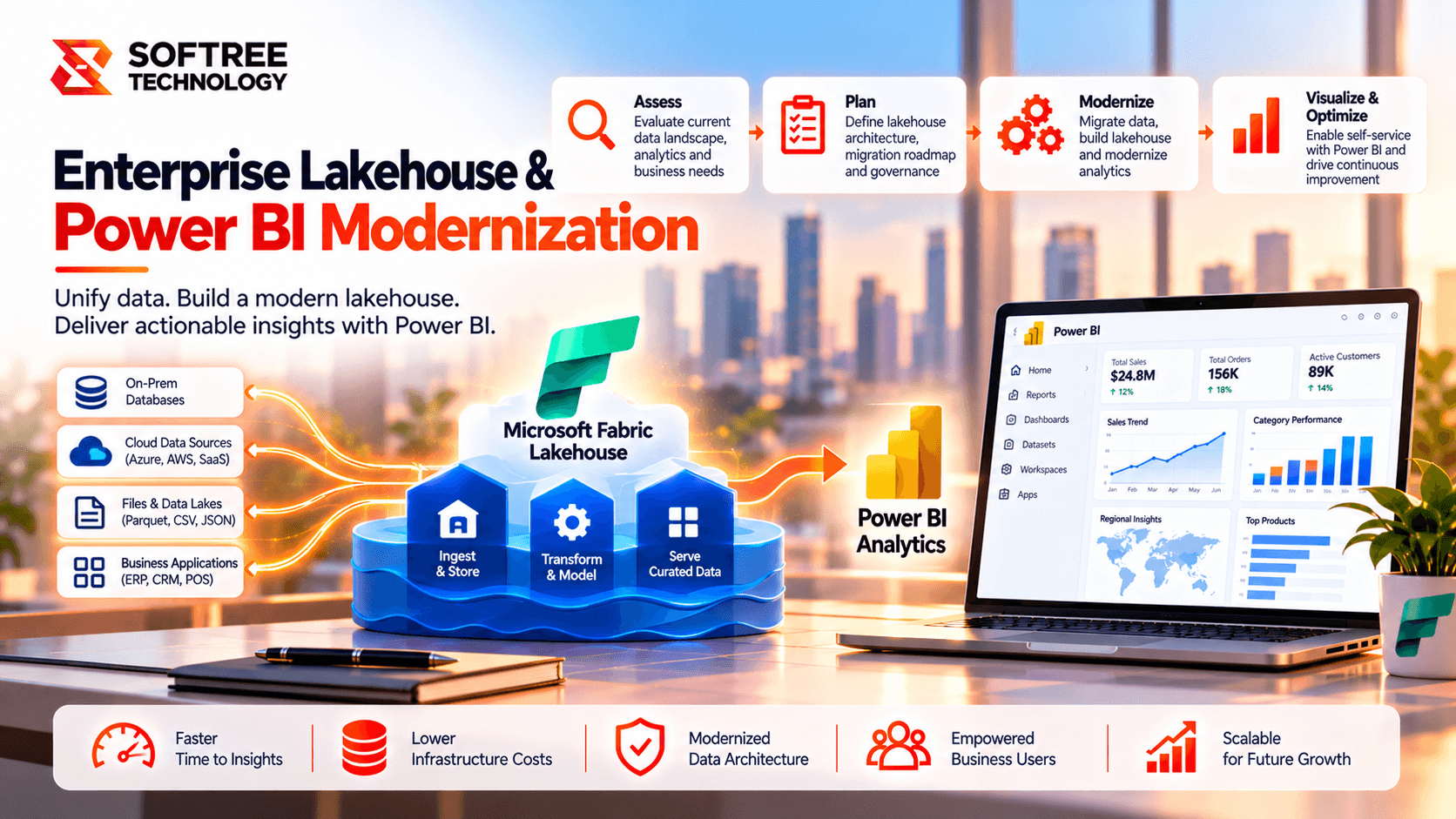
Enterprise Lakehouse Power BI Migration Modernization Services
A U.S. retail and e-commerce company modernized its Azure data platform with Microsoft Fabric, unifying analytics workloads and improving data governance.
Read case study→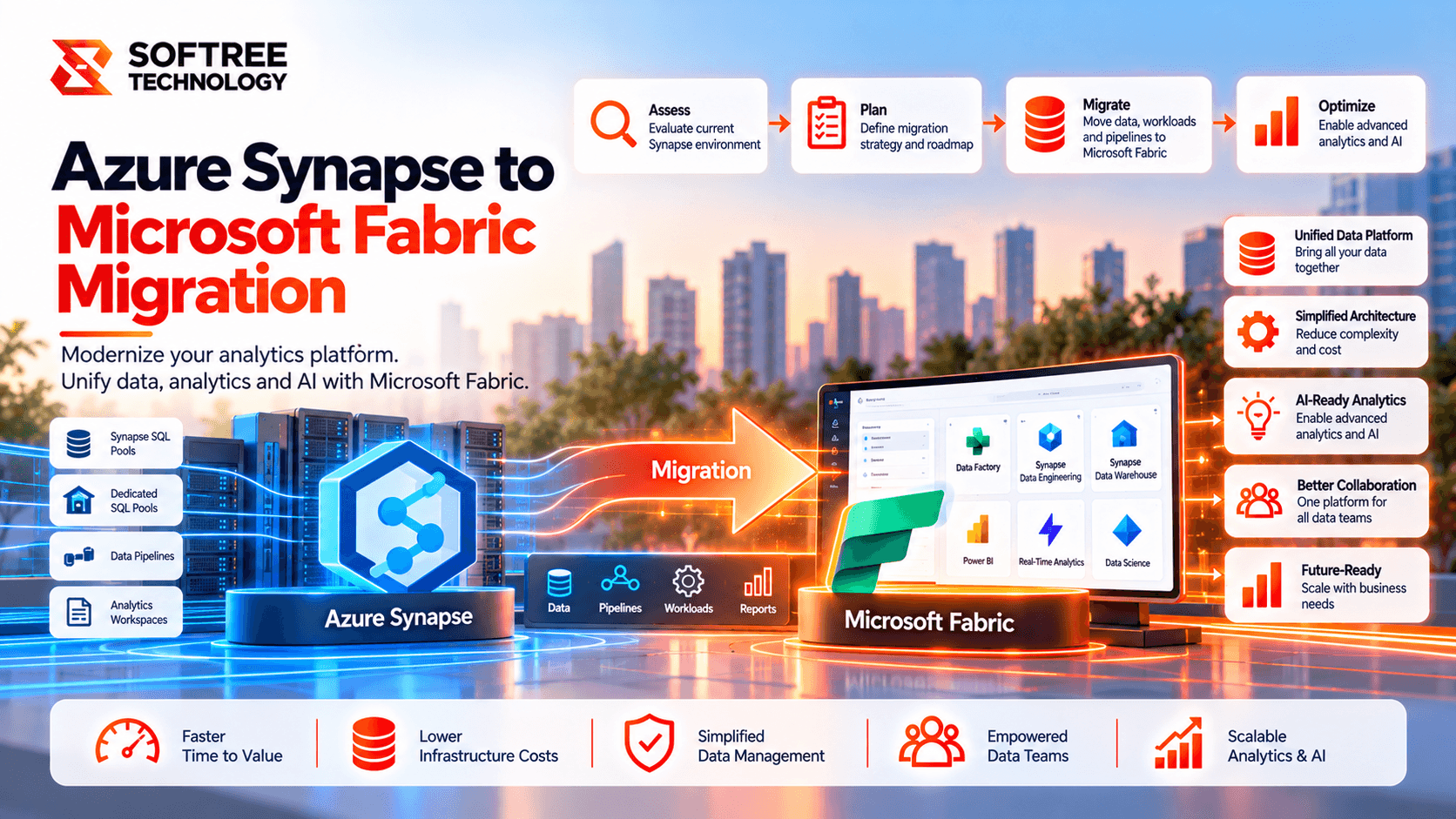
Azure Synapse to Microsoft Fabric Migration
Softree modernized an Azure Synapse environment by migrating data workloads, pipelines, Spark notebooks, OneLake, and Power BI dependencies to Microsoft Fabric.
Read case study→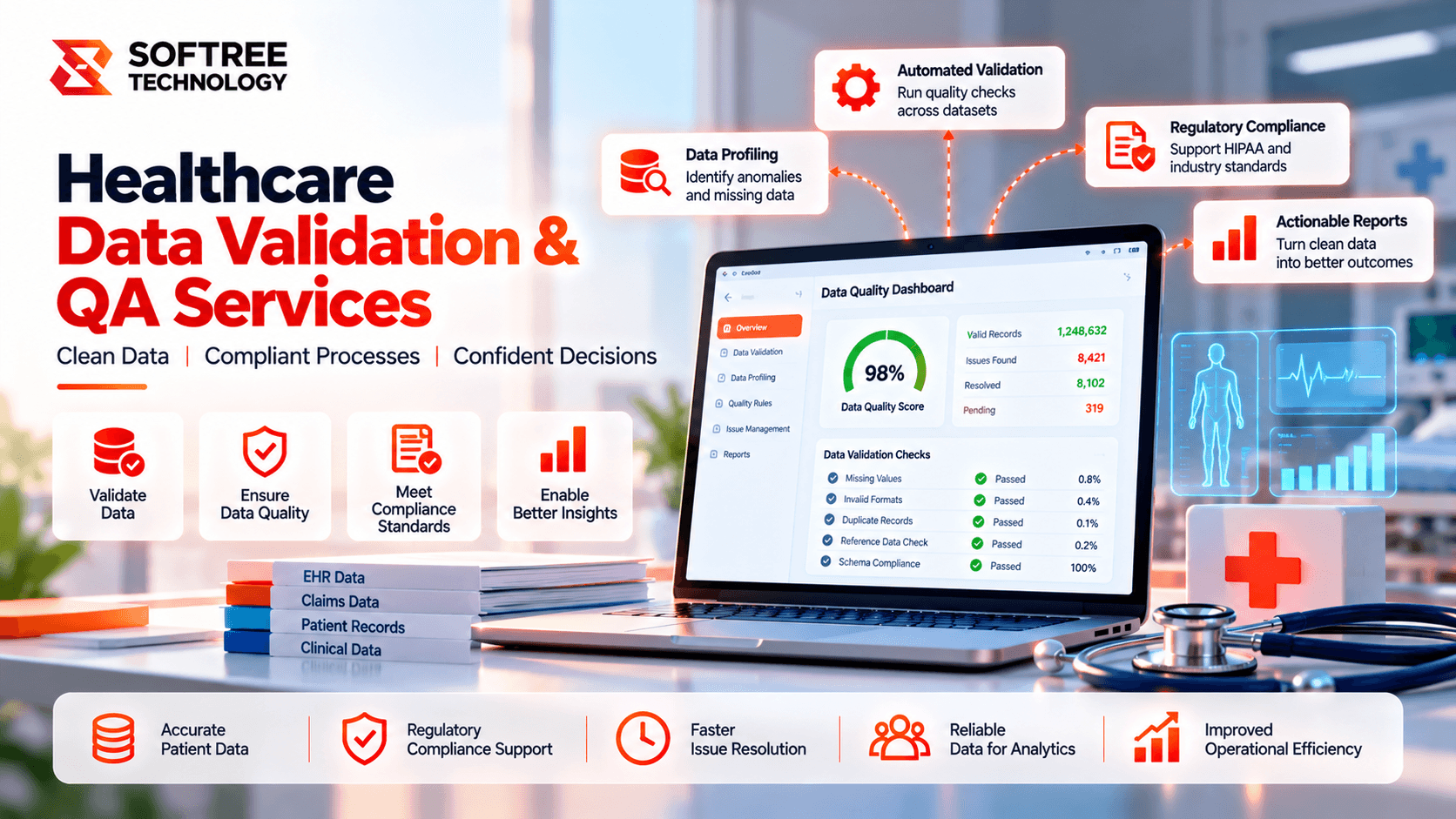
Healthcare Data Validation and Quality Assurance
Explore an AI-powered healthcare data validation platform designed to test data integrity across patient records, lab results, and insurance claims.
Read case study→Frequently asked questions.
Build faster with a reliable offshore engineering partner.
Partner with Softree to accelerate product delivery, modernize enterprise systems, and scale with confidence.

What we offer
Offices
Bengaluru
11th Floor, Prestige Tech Park, Platina 2 · Outer Ring Rd, Kadubeesanahalli · Bengaluru, Karnataka 560087, India
Cuttack
PLOT B6-1628, SECTOR-10, CDA · Cuttack, Odisha 753014 · India
San Francisco
San Francisco, CA 94108 · United States
Got a question, challenge, or idea?
Fill out the form or pick a time on our scheduler.
30-min discovery call
Same Calendly as our booking page · instant invite