How Microsoft Foundry and Multi-Agent AI Can Optimize Logistics Costs While Protecting SLAs
See how multi-agent AI can help logistics teams identify savings, optimize carrier decisions, and protect customer SLAs across transportation operations.
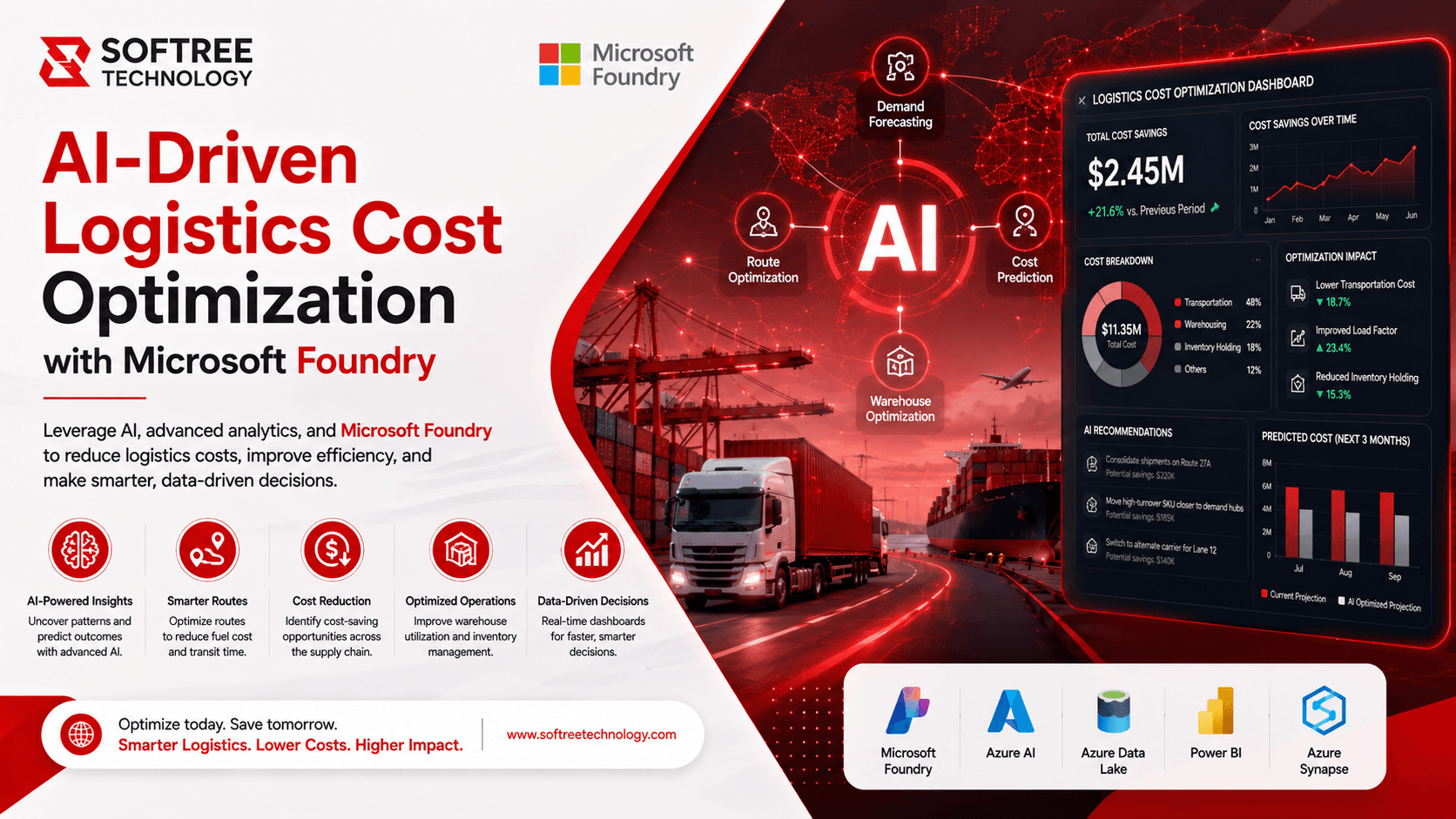
Business Process Challenges
A representative logistics enterprise operates a complex, multi-carrier transportation network with high shipment volumes across multiple lanes, carriers, service levels, facilities, and customer commitments. Transportation costs are influenced by freight rates, fuel, accessorial charges, capacity, routing, consolidation, and last-minute operational changes.
Transportation decisions often require fragmented data, manual analysis, and rapid judgment. High and volatile transportation costs, complex carrier selection, inefficient shipment consolidation, and slow exception management can all increase operational costs or create service risks.
Existing reports can explain what happened, but planners also need recommendations about what to do next. TMS/ERP data, carrier performance, contracts, shipment history, and operational constraints may not always be evaluated together.
Our Strategic Approach
Softree designed a multi-agent AI architecture that creates an intelligent operating layer for transportation cost and service decisions.
The architecture brings together logistics data from ERP, TMS, WMS, carrier APIs, rate cards, shipment history, GPS/telematics, customer SLAs, and operational events. Microsoft Fabric and Power BI provide the data and analytics foundation, while Microsoft Foundry supports the development, evaluation, governance, and operation of agentic AI applications.
Specialized Cost, Carrier, Shipment, and SLA/Exception Agents work with an Orchestrator Agent to evaluate transportation decisions and produce recommendations. These recommendations can be presented to planners and, where approved, passed to downstream logistics workflows or systems.
The implementation follows a phased approach:
- Discover & Baseline — Map processes, data sources, KPIs, contracts, SLAs, and transportation spend.
- Build Trusted Data Foundation — Unify shipment, carrier, rate, route, performance, and SLA data.
- Develop Specialist Agents — Build focused agents for cost, carrier, shipment, and SLA/exception analysis.
- Orchestrate Decisions — Combine agent outputs into recommendations with confidence, expected savings, service impact, and supporting evidence.
- Pilot With Human Approval — Begin with selected lanes, carriers, or shipment types and require planner approval for material operational changes.
- Measure & Scale — Track realized savings, SLA outcomes, model quality, recommendation acceptance, and operational adoption.
Our Engineering & Delivery Process
Our structured project delivery approach takes you from discovery and planning to development, testing, and deployment, ensuring quality, transparency, and predictable outcomes at every stage.
Discovery & Architecture
Deep-dive technical audit of existing systems, security baselines, API mapping, and comprehensive cloud target blueprinting.
UX & System Prototyping
Role-based user journeys, wireframing, high-fidelity clickable Figma prototypes, and API contract specifications prior to build.
Agile Sprint Engineering
Modular development sprints delivering clean, shippable code with automated CI/CD pipelines and continuous testing.
QA & Security Hardening
End-to-end regression suites, cross-device verification, load stress audits, and penetration testing for enterprise resilience.
Production Launch & Scale
Zero-downtime blue-green production deployment, real-time telemetry, administrator training runbooks, and ongoing SLA support.
Explore the Solution Through visuals
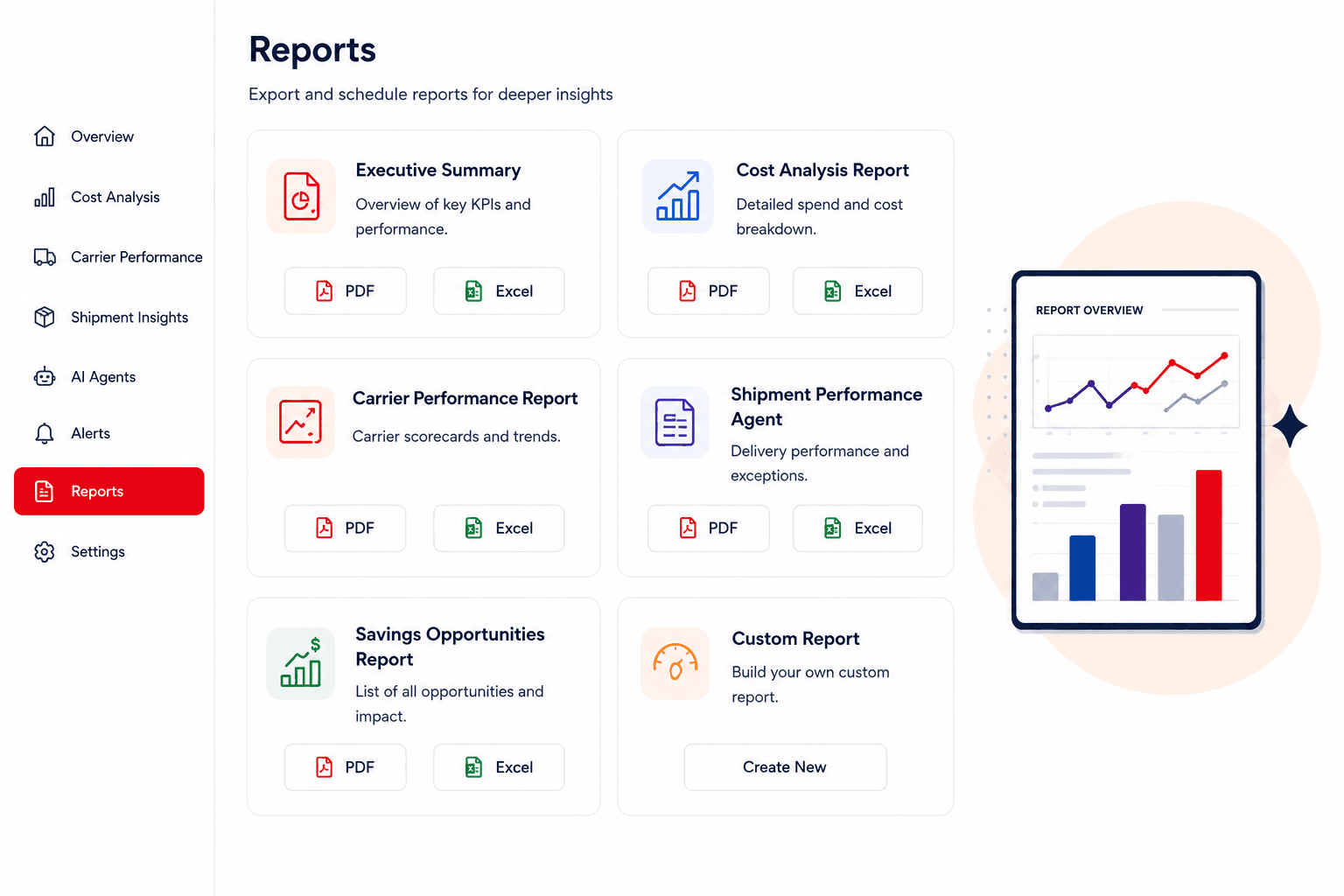
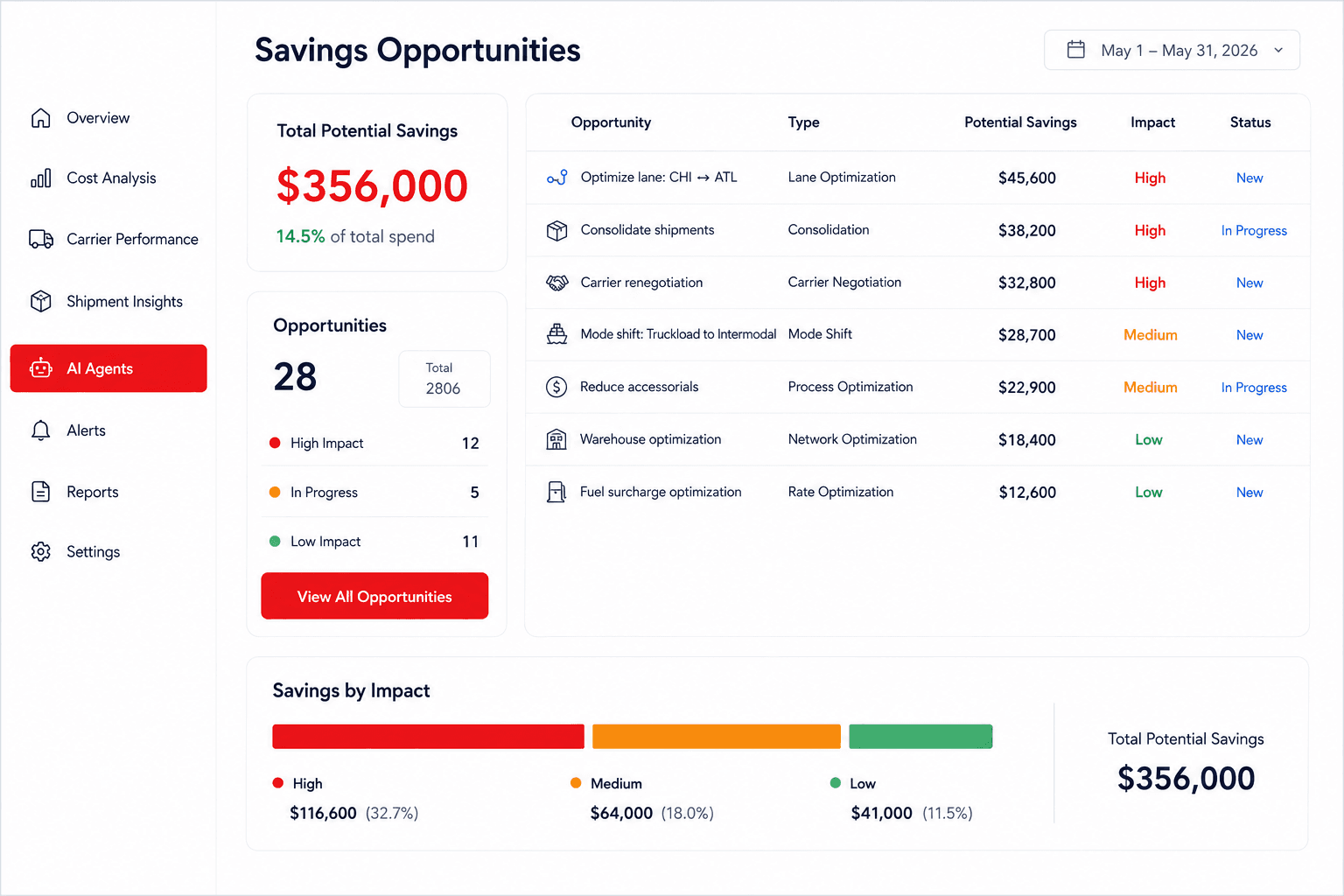
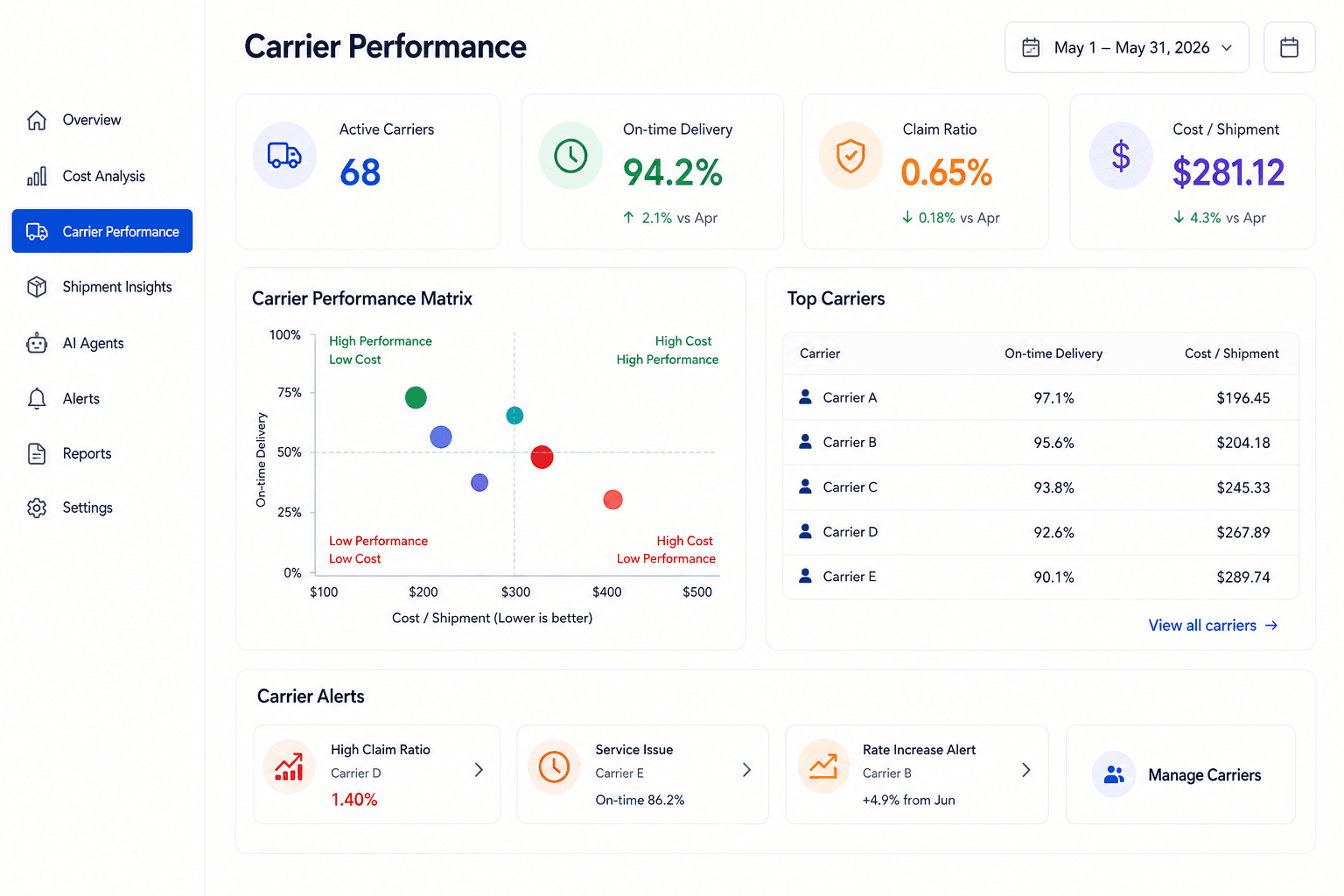
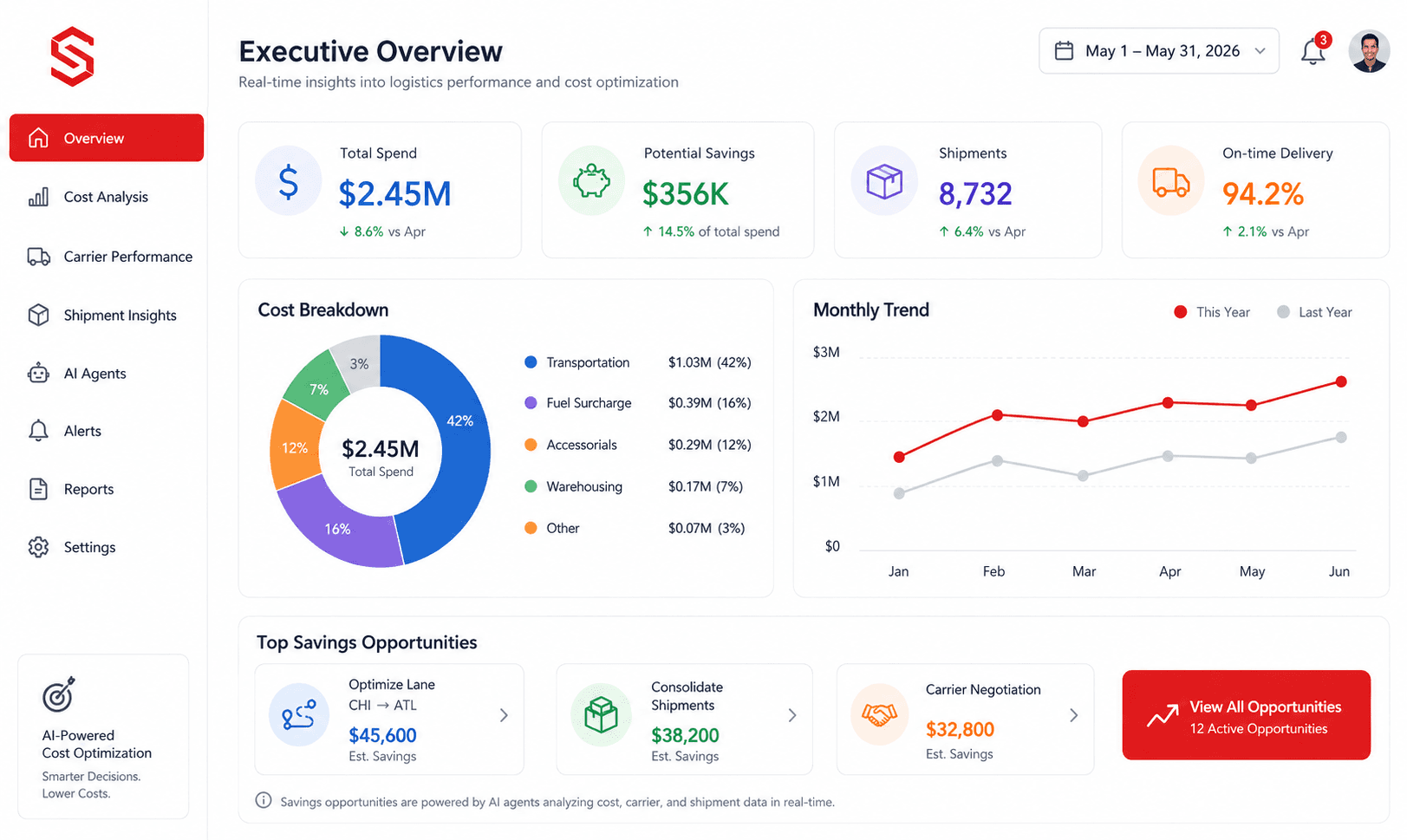
What changed for the client.
The proposed solution is designed to help logistics organizations identify and prioritize transportation savings opportunities while balancing cost against customer service commitments. The source explicitly describes these as illustrative business outcomes that should be validated against client baseline and pilot data.
Expected business impact includes:
- Transportation cost: Identify high-value savings opportunities across lanes, carriers, modes, and shipment decisions.
- Planner productivity: Reduce manual analysis through summarized evidence and recommended next actions.
- SLA performance: Balance transportation savings with customer service commitments.
- Decision speed: Move from spreadsheet-heavy investigation toward near-real-time analysis.
- Continuous improvement: Compare recommendations with actual outcomes and improve future decisions.
The recommended next step is a focused 6–8 week pilot covering defined lanes, carriers, or shipment types, with baseline measurement and validation of savings, service impact, recommendation quality, and user adoption.
The numbers behind the rollout.
The full integration layer.
Other engagements worth a look.
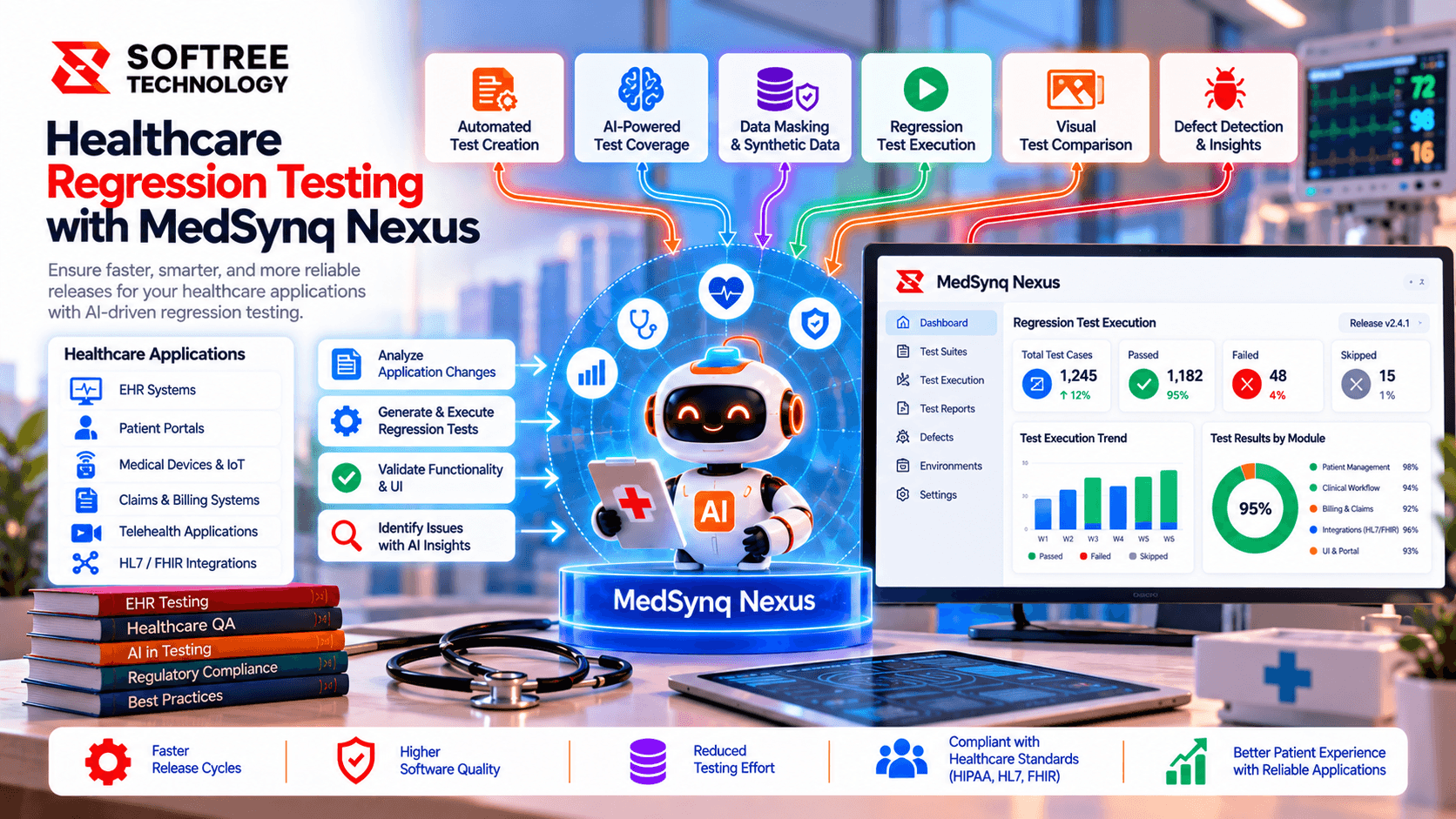
Healthcare Regression Testing with MedSynq Nexus
MedSynq Nexus uses AI-assisted impact analysis to prioritize healthcare regression tests, targeting up to 60% shorter regression cycles in eligible scenarios.
Read case study→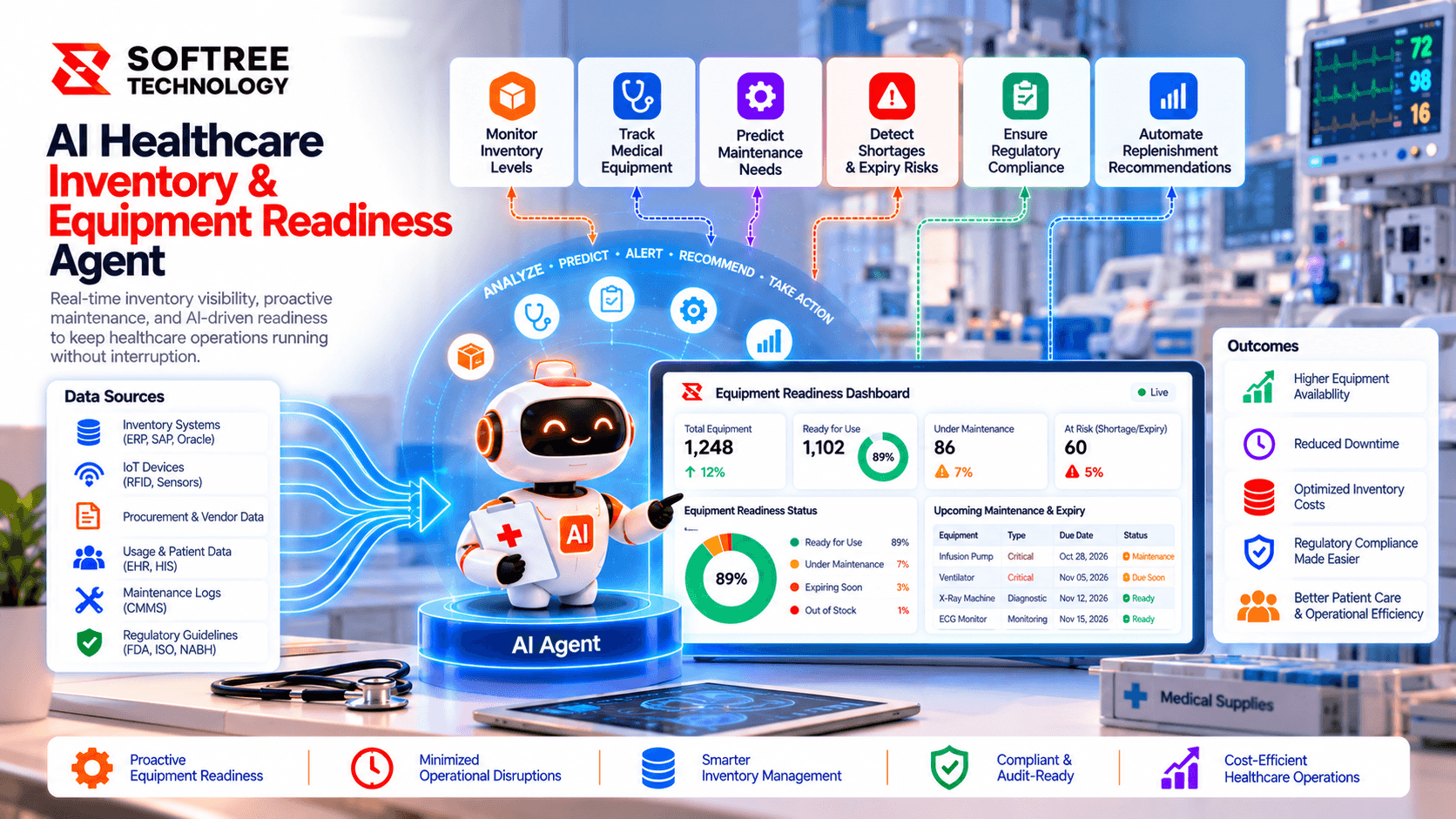
AI Healthcare Inventory & Equipment Readiness Agent
Softree designed an AI healthcare agent to monitor inventory, flag expiry risks, assess equipment readiness, and coordinate replenishment across hospital departments.
Read case study→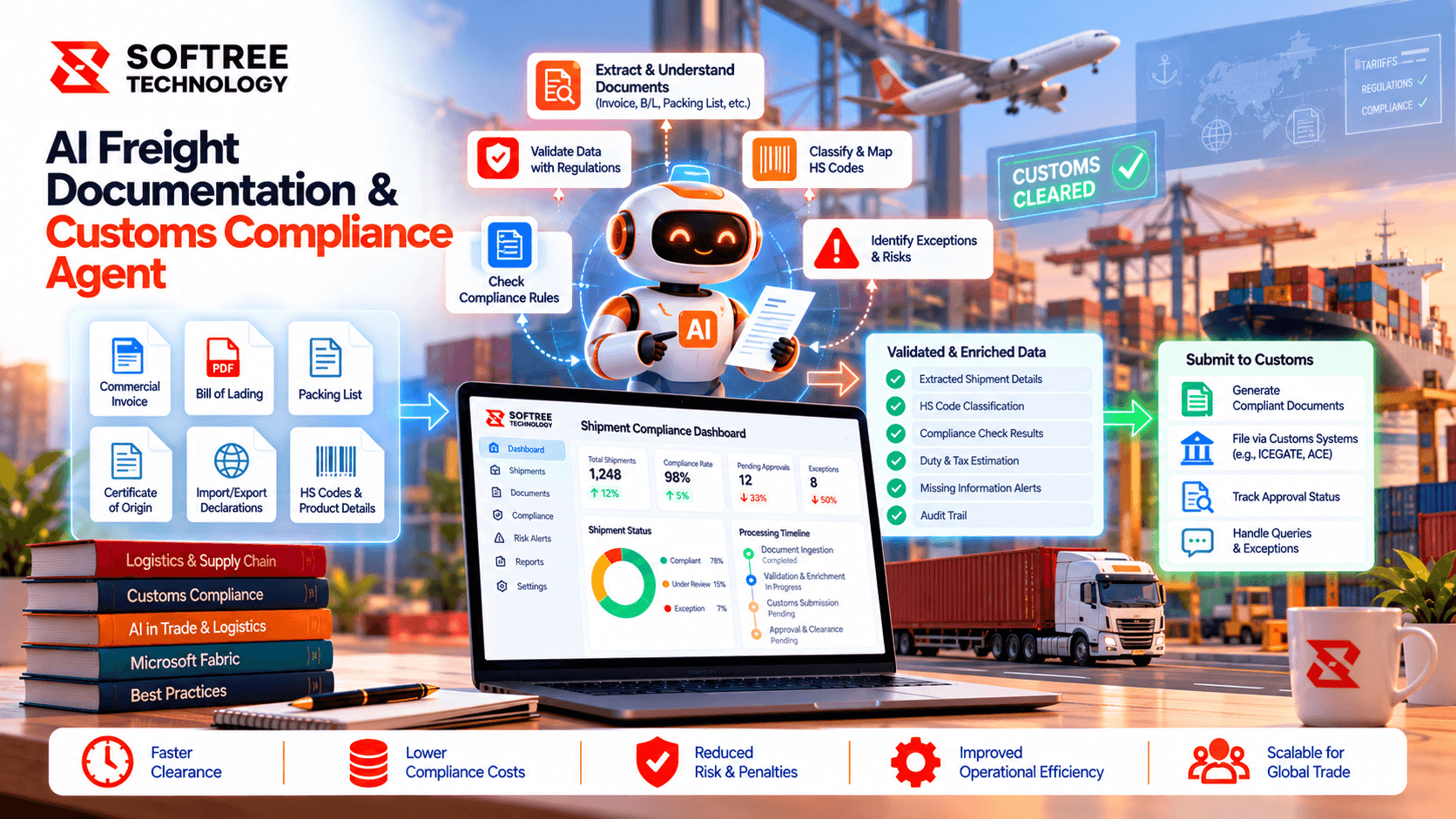
AI Freight Documentation & Customs Compliance Agent
A UAE freight operator used an AI documentation agent to identify shipment gaps, flag discrepancies, and route customs exceptions for review.
Read case study→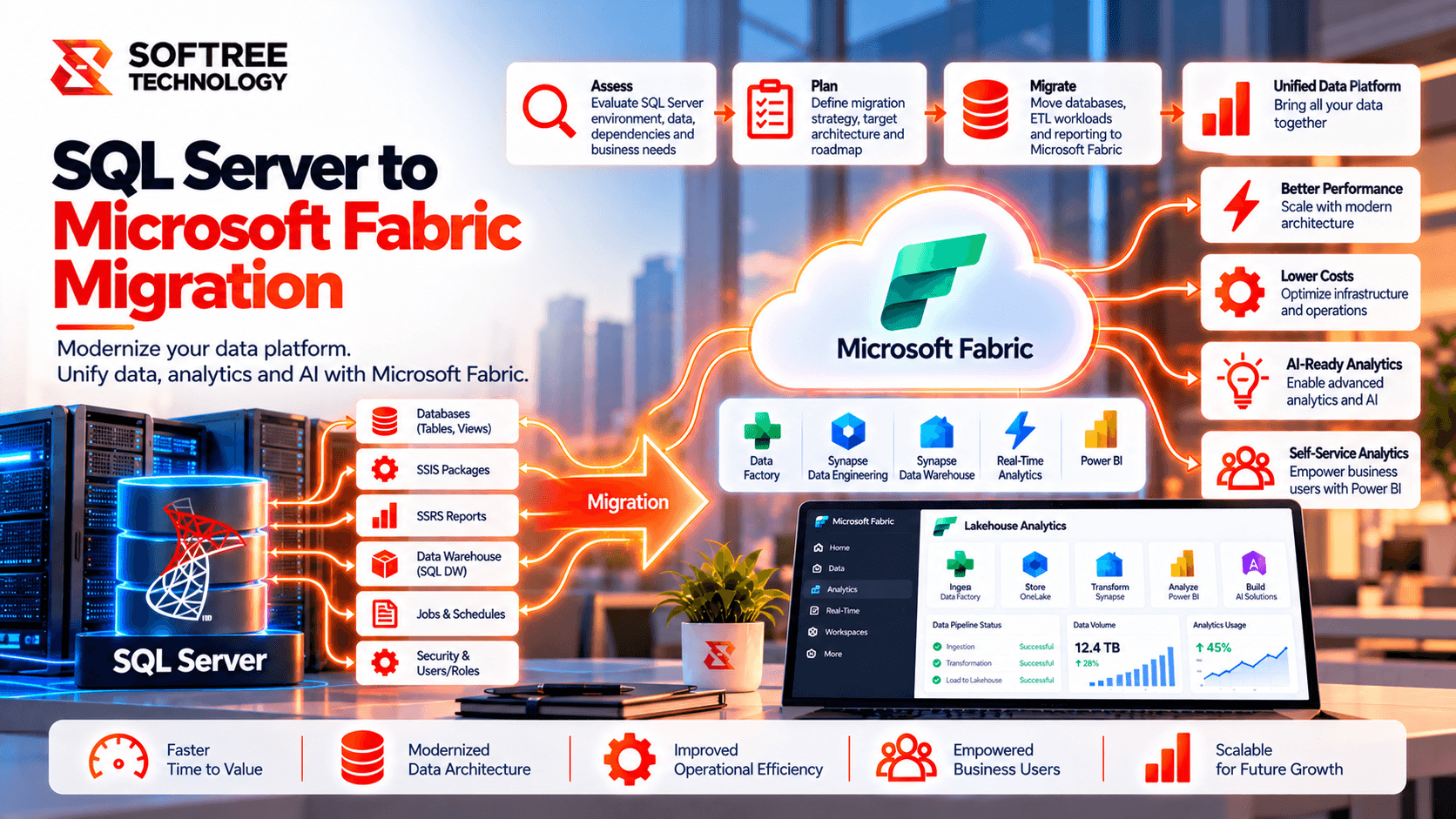
SQL Server to Microsoft Fabric Data Warehouse Migration
Modernizing an enterprise SQL Server data warehouse with Microsoft Fabric while maintaining data quality, performance, security, and reporting continuity.
Read case study→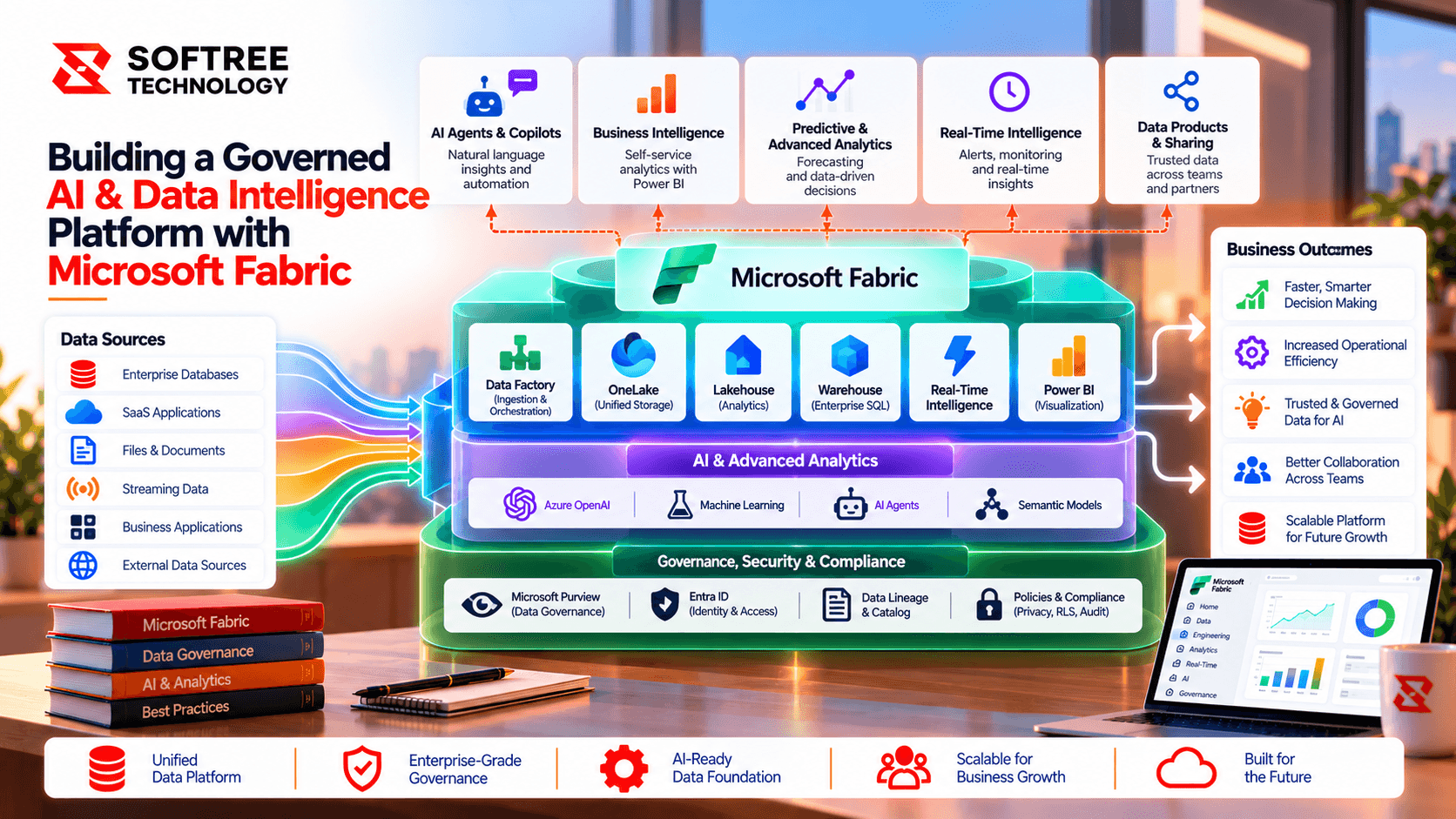
Building a Governed AI & Data Intelligence Platform with Microsoft Fabric
A Fabric and AI data platform unifies enterprise data and documents, enabling governed RAG, analytics, and permission-aware AI experiences.
Read case study→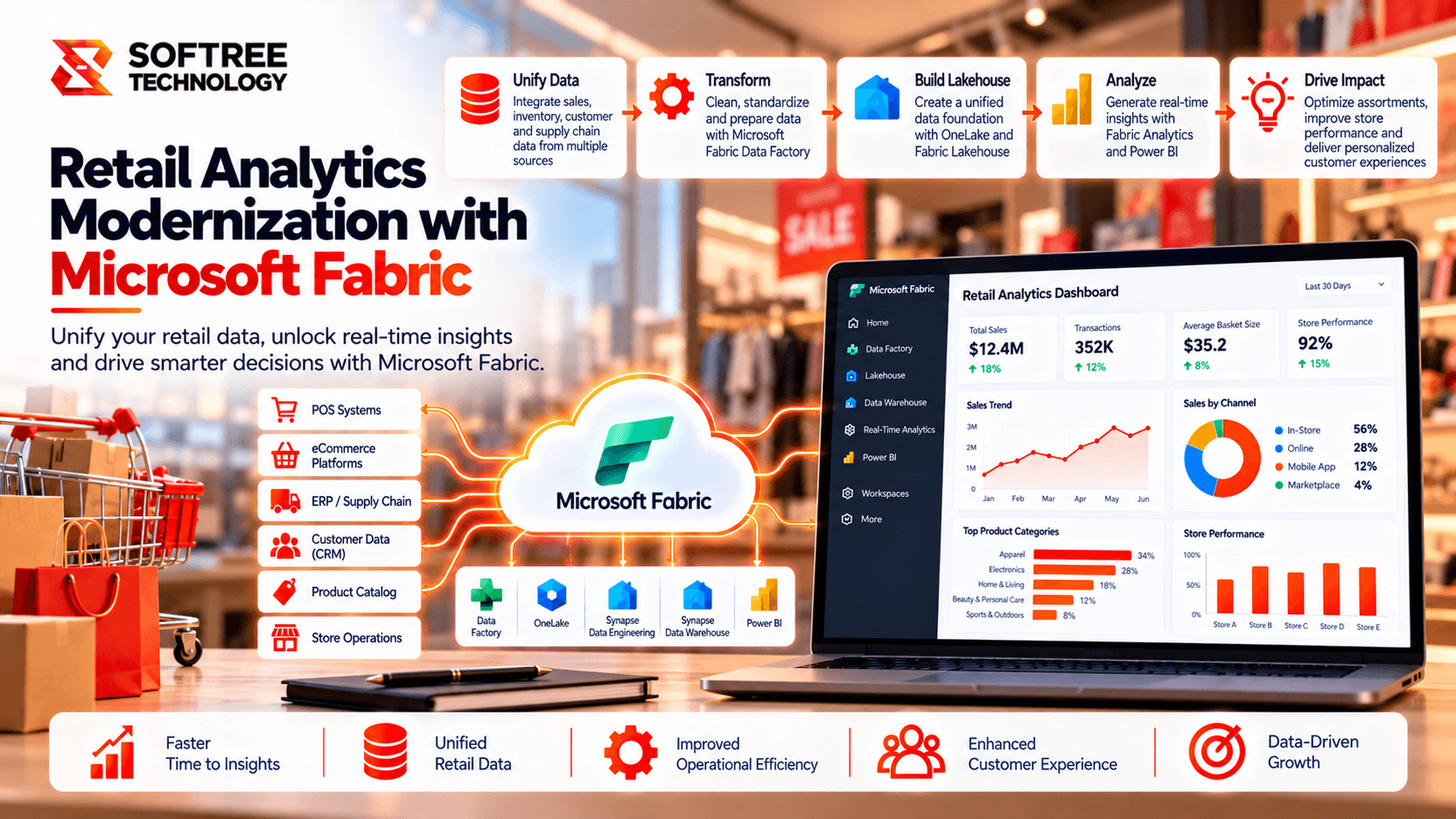
Retail Analytics Modernization with Microsoft Fabric.
Softree modernized a retail analytics environment with Microsoft Fabric, improving data governance, semantic model reuse and Power BI performance.
Read case study→Frequently asked questions.
Build faster with a reliable offshore engineering partner.
Partner with Softree to accelerate product delivery, modernize enterprise systems, and scale with confidence.

What we offer
Offices
Bengaluru
11th Floor, Prestige Tech Park, Platina 2 · Outer Ring Rd, Kadubeesanahalli · Bengaluru, Karnataka 560087, India
Cuttack
PLOT B6-1628, SECTOR-10, CDA · Cuttack, Odisha 753014 · India
San Francisco
San Francisco, CA 94108 · United States
Got a question, challenge, or idea?
Fill out the form or pick a time on our scheduler.
30-min discovery call
Same Calendly as our booking page · instant invite