AI-Based Fraud Detection in Logistics
A global logistics enterprise used AI-based fraud detection to identify suspicious orders, shipment patterns, and delivery activity while reducing fraud risk.

Business Process Challenges
A global logistics and supply chain company operating across multiple regions manages a high volume of orders, shipments, and delivery transactions every day. As digital transactions increased, the organization needed a data-driven approach to identify fraudulent orders, suspicious shipment behavior, and irregular delivery activity while providing business teams with clear, real-time visibility into fraud trends.
The existing fraud-detection process relied heavily on predefined rules, disconnected data sources, and manual investigation. Fraud-related information was difficult to analyze across large transaction volumes, making it challenging to identify emerging patterns, monitor risk indicators, and distinguish genuine activity from potentially fraudulent behavior.
Key challenges included:
- Limited visibility into fraud trends across orders and shipments
- Fake or inconsistent delivery confirmations
- Duplicate or suspicious orders
- Unusual shipment routes and transaction patterns
- High-value orders requiring additional risk analysis
- Large volumes of transaction data requiring manual investigation
- False positives affecting legitimate customers
- Fraud indicators distributed across multiple transactions and data sources
- Difficulty identifying previously unseen fraud patterns
- Lack of centralized Power BI dashboards for fraud monitoring and risk analytics
- Limited real-time visibility into fraud KPIs, risk scores, and investigation trends
- Difficulty providing actionable insights to operations and business teams
Our Strategic Approach
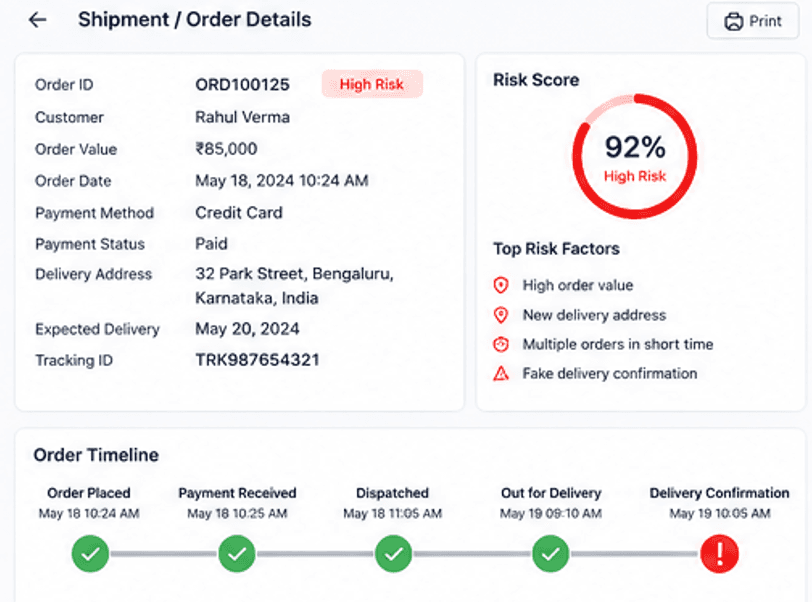
- Implemented an AI/ML-powered fraud detection engine to analyze historical and real-time order, transaction, shipment, and delivery data.
- Integrated Power BI and data analytics to provide centralized visibility into fraud trends, risk levels, suspicious transactions, and investigation metrics.
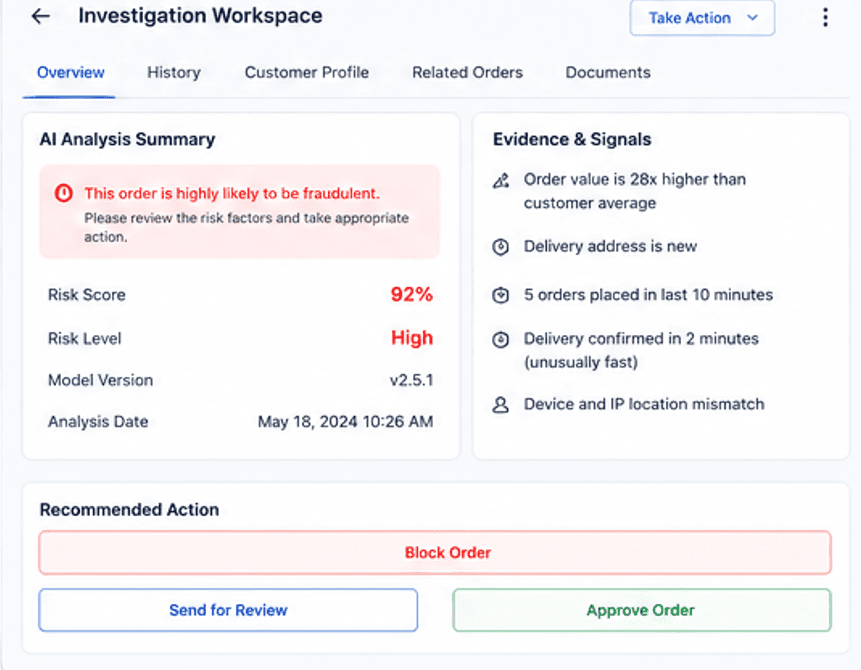
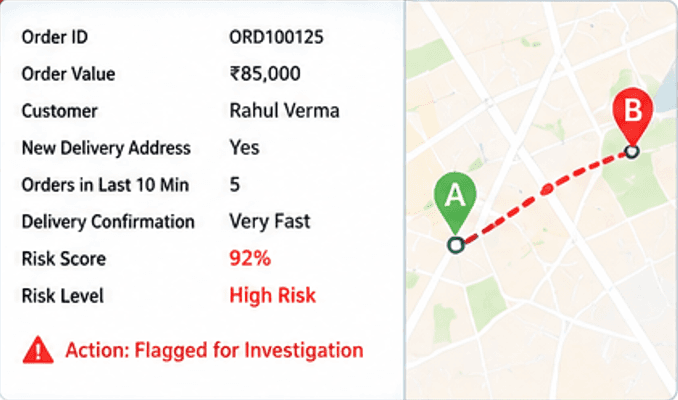
- Analyzed multiple fraud indicators, including order value, customer behavior, delivery address, shipment history, delivery confirmations, tracking information, shipment routes, order frequency, transaction timing, and historical transaction patterns.
- Generated an automated fraud-risk score for each transaction.
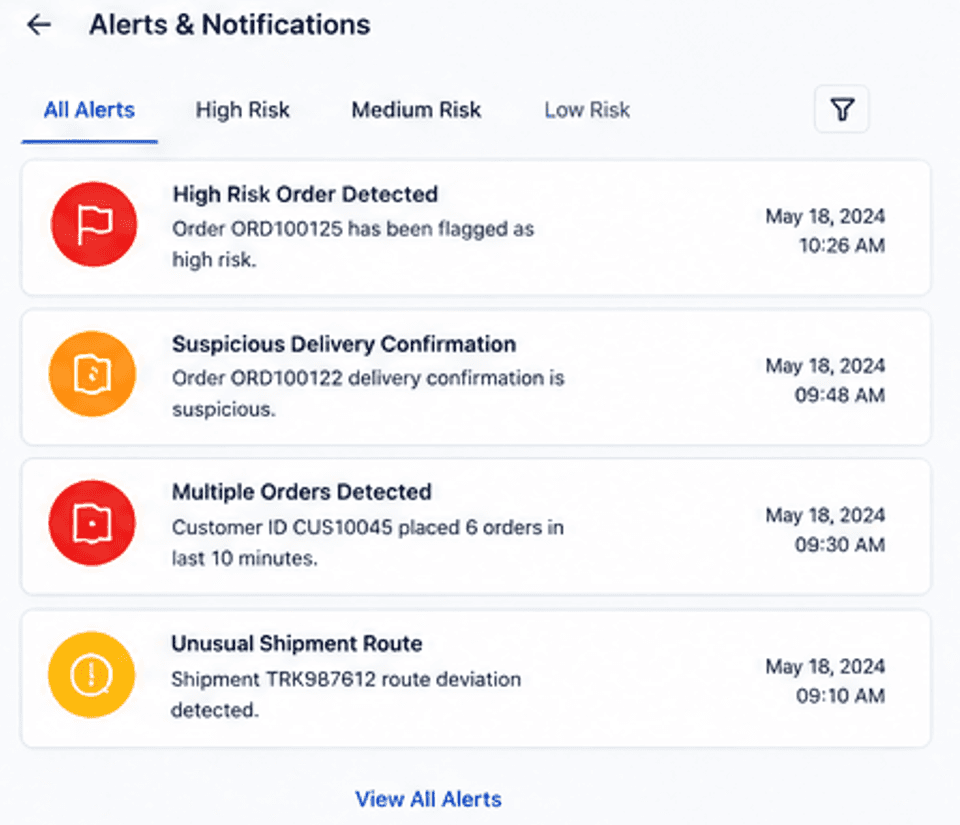
- Classified transactions into Low Risk, Medium Risk, and High Risk categories.
- Applied data validation and transformation processes to prepare reliable transaction and shipment data for AI analysis and reporting.
- Created Power BI dashboards for fraud-risk distribution, suspicious transaction analysis, fraud trends, high-value risk monitoring, shipment and route anomalies, investigation metrics, and transaction-level risk insights.
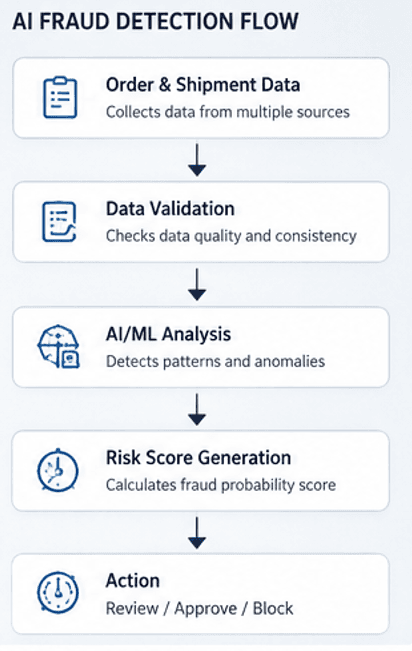
- Implemented the processing flow: Transaction & Shipment Data → Data Validation & Transformation → AI/ML Analysis → Risk Score → Risk Classification → Power BI Analytics → Business Action.
- Applied a comprehensive QA strategy covering functional testing, AI model validation, positive and negative testing, false-positive and false-negative testing, boundary testing, data validation, API testing, regression testing, model-version testing, explainability testing, Power BI data and dashboard validation, performance testing, and end-to-end testing.
How we delivered it.
Explore the Solution Through visuals
What changed for the client.
The AI-based solution helped move the organization from rule-based fraud detection toward intelligent behavioral analysis.
Expected business benefits included:
- Improved fraud detection
- Reduced fraudulent shipments
- Reduced financial losses
- Lower manual investigation effort
- Better detection of unknown fraud patterns
- Reduced false positives
A key focus was ensuring that the AI could detect genuine fraud without unnecessarily disrupting legitimate logistics transactions.
The numbers behind the rollout.
The full integration layer.
Other engagements worth a look.
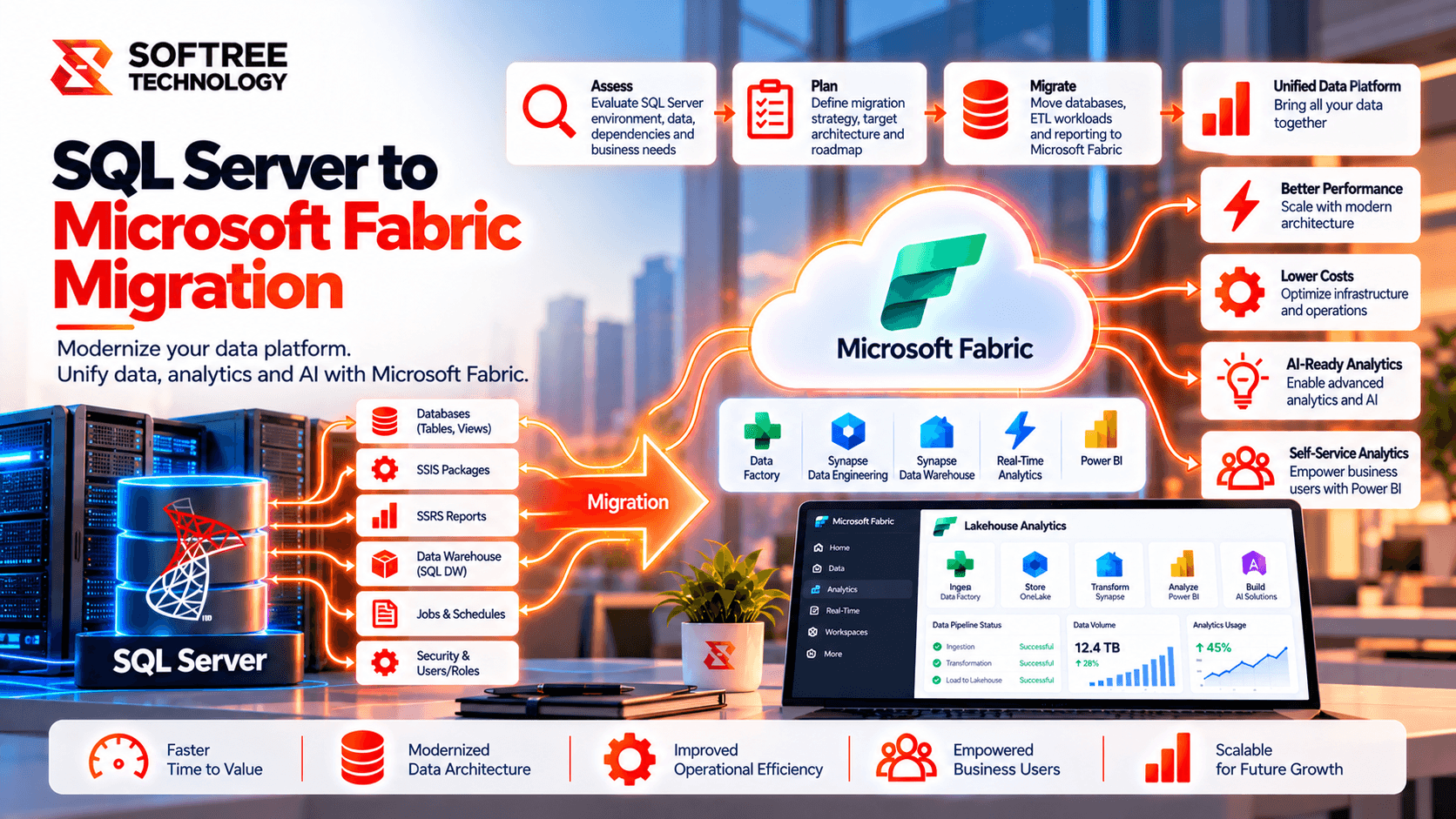
SQL Server to Microsoft Fabric Data Warehouse Migration
Modernizing an enterprise SQL Server data warehouse with Microsoft Fabric while maintaining data quality, performance, security, and reporting continuity.
Read case study→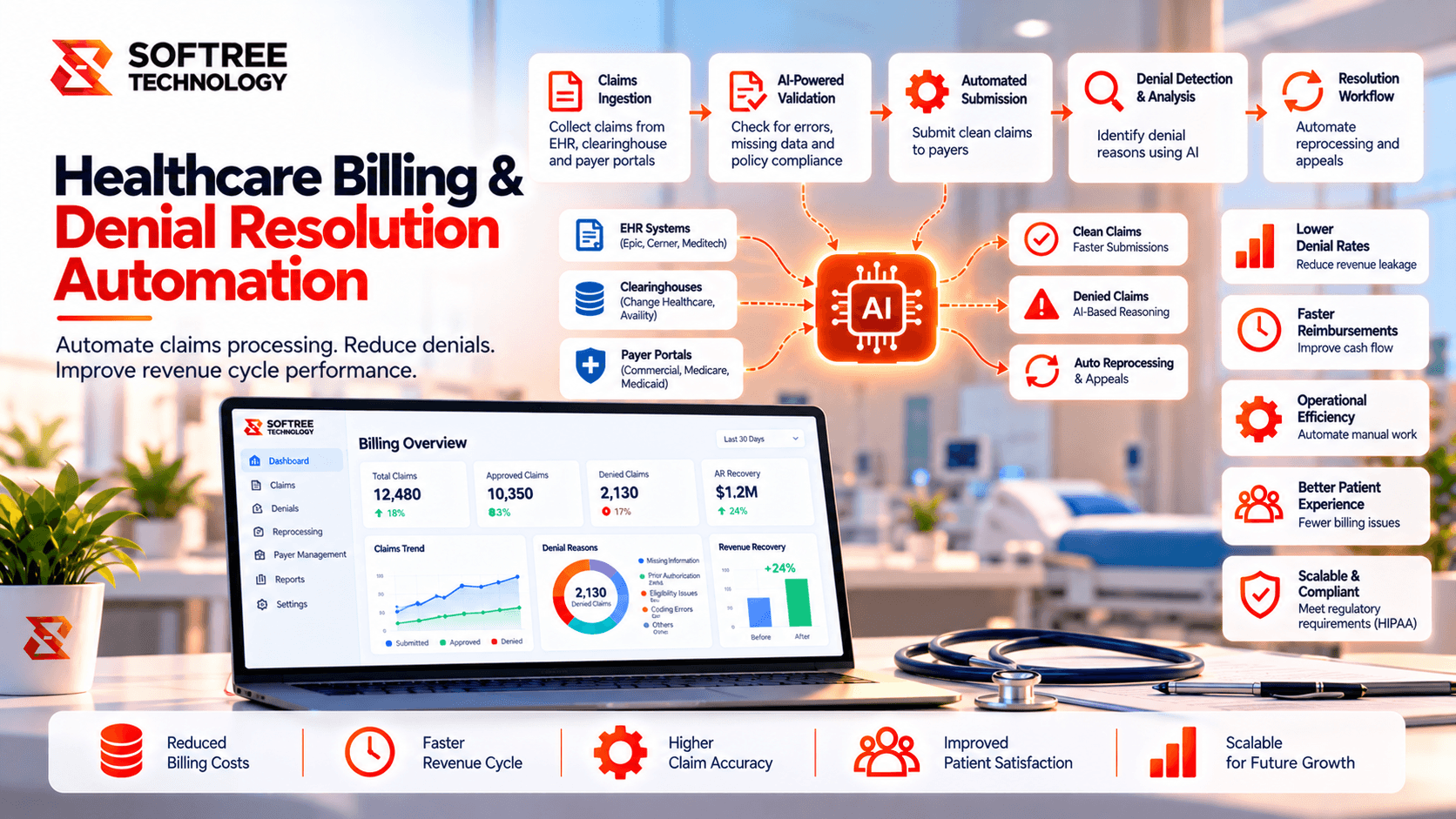
Healthcare Billing & Denial Resolution Agent
A Singapore healthcare provider proposed an AI agent to streamline claim denial investigations, payer research, follow-ups, and specialist review.
Read case study→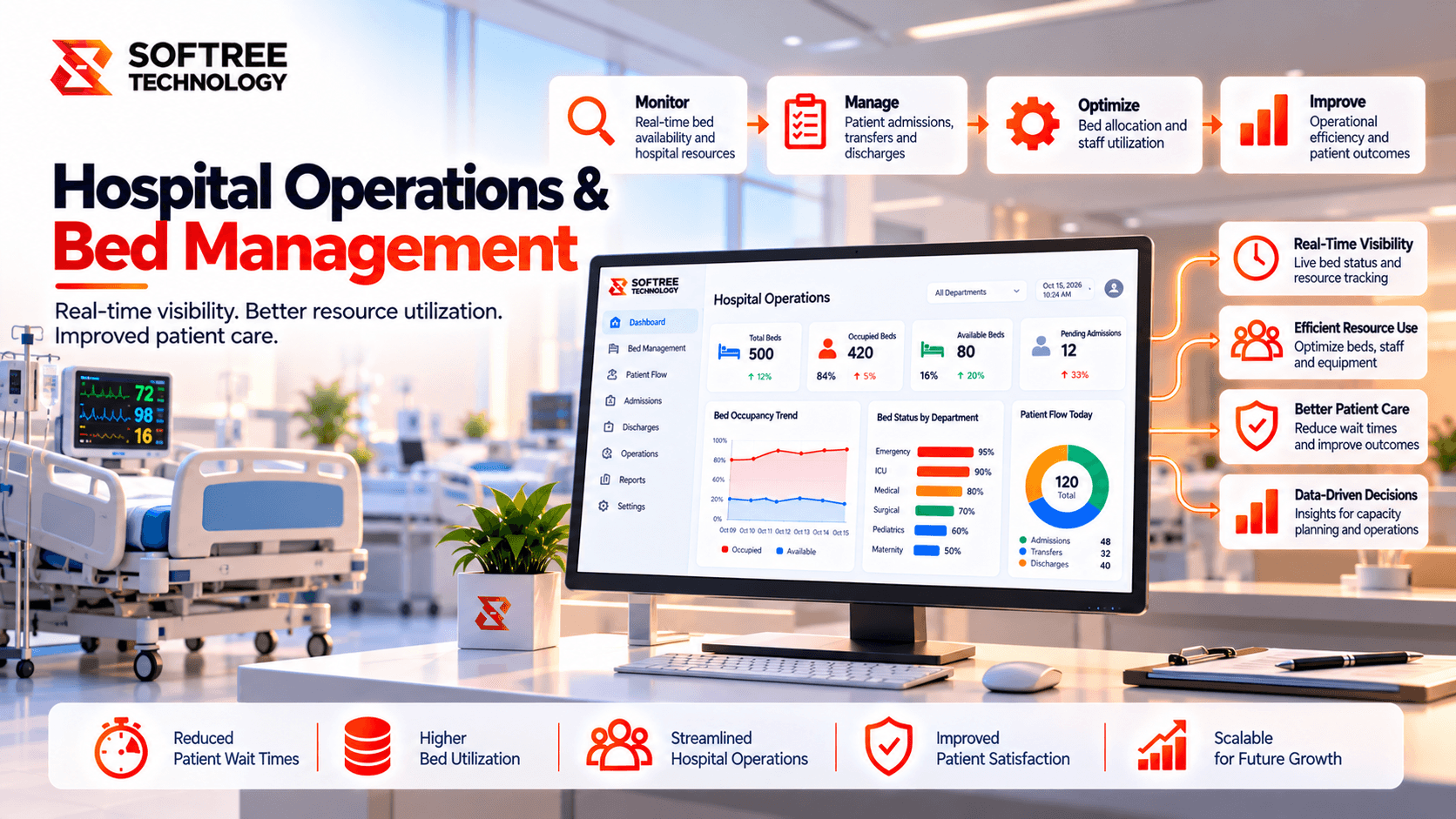
Hospital Operations & Bed Management Agent
A UAE hospital network proposed an agentic AI solution to improve bed readiness, discharge coordination, patient transfers, and operational visibility.
Read case study→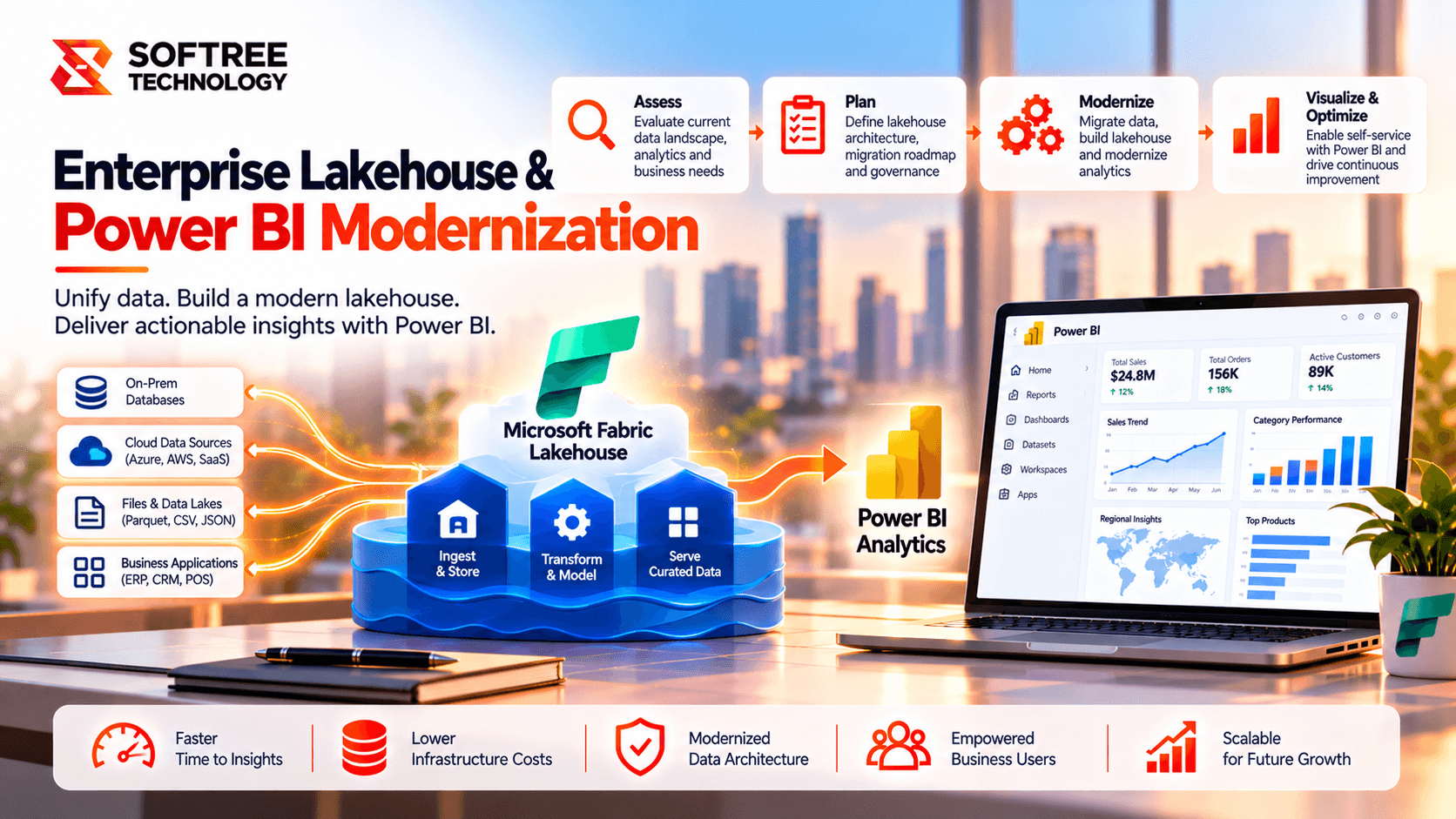
Enterprise Lakehouse Power BI Migration Modernization Services
A U.S. retail and e-commerce company modernized its Azure data platform with Microsoft Fabric, unifying analytics workloads and improving data governance.
Read case study→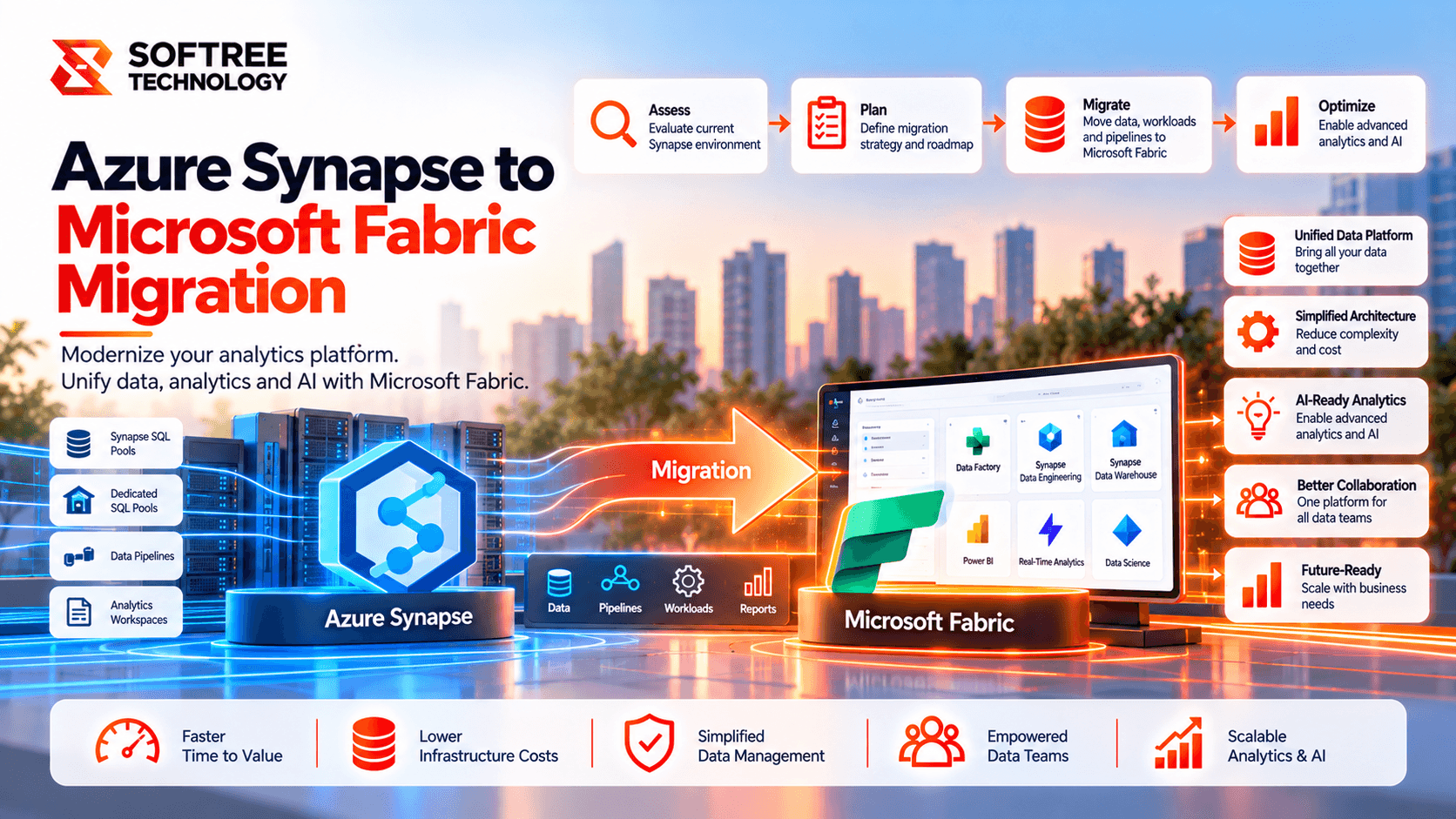
Azure Synapse to Microsoft Fabric Migration
Softree modernized an Azure Synapse environment by migrating data workloads, pipelines, Spark notebooks, OneLake, and Power BI dependencies to Microsoft Fabric.
Read case study→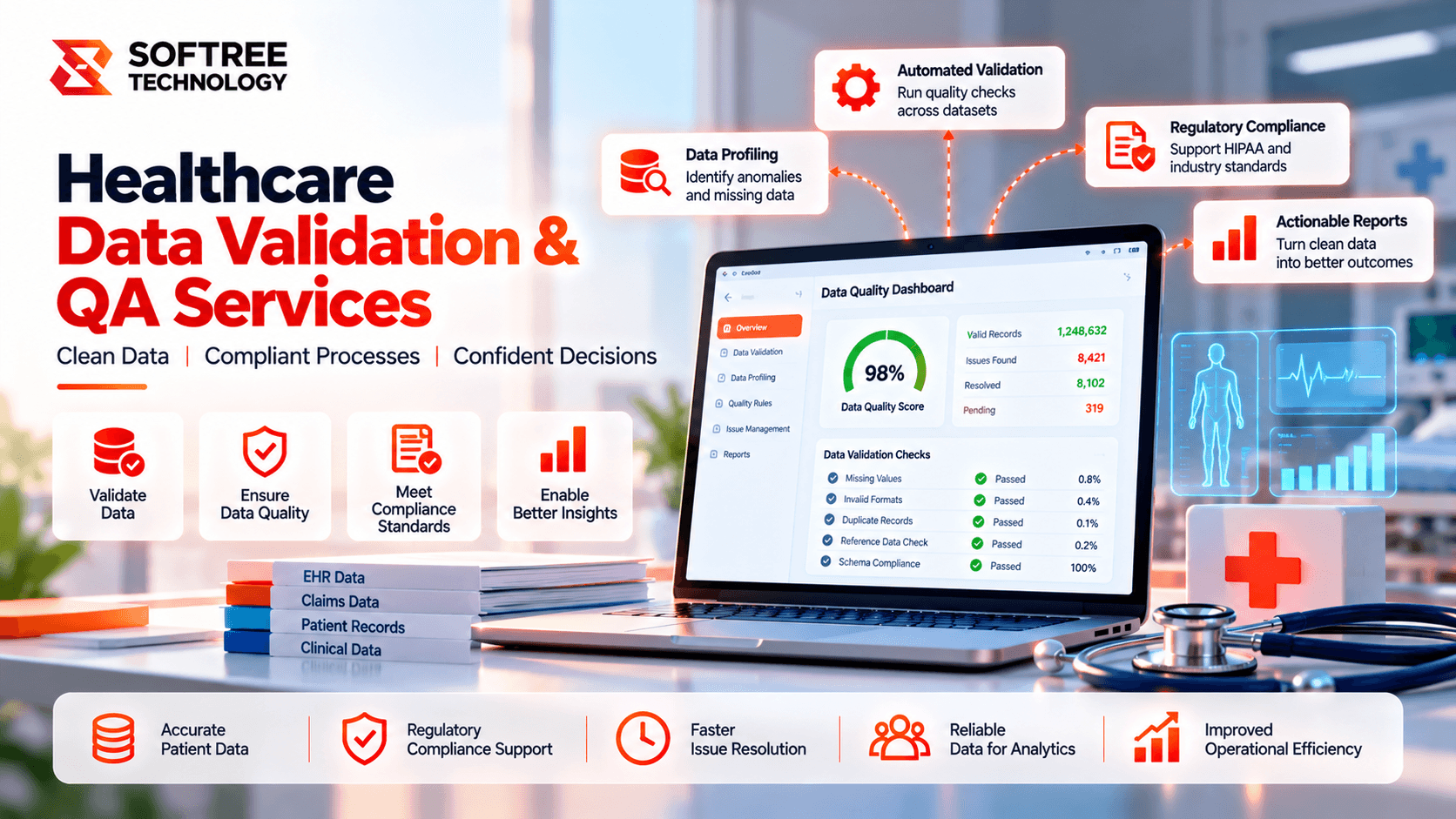
Healthcare Data Validation and Quality Assurance
Explore an AI-powered healthcare data validation platform designed to test data integrity across patient records, lab results, and insurance claims.
Read case study→Frequently asked questions.
Build faster with a reliable offshore engineering partner.
Partner with Softree to accelerate product delivery, modernize enterprise systems, and scale with confidence.

What we offer
Offices
Bengaluru
11th Floor, Prestige Tech Park, Platina 2 · Outer Ring Rd, Kadubeesanahalli · Bengaluru, Karnataka 560087, India
Cuttack
PLOT B6-1628, SECTOR-10, CDA · Cuttack, Odisha 753014 · India
San Francisco
San Francisco, CA 94108 · United States
Got a question, challenge, or idea?
Fill out the form or pick a time on our scheduler.
30-min discovery call
Same Calendly as our booking page · instant invite